
Accountability
Why Clean Water Is the First Step Out of Poverty
It is easy to think of poverty as a shortage of money. On the ground it often begins as a shortage of something more basic, and the fix has a year three that most appeals never mention.
By the Lift A Life Foundation team · · 5 min read
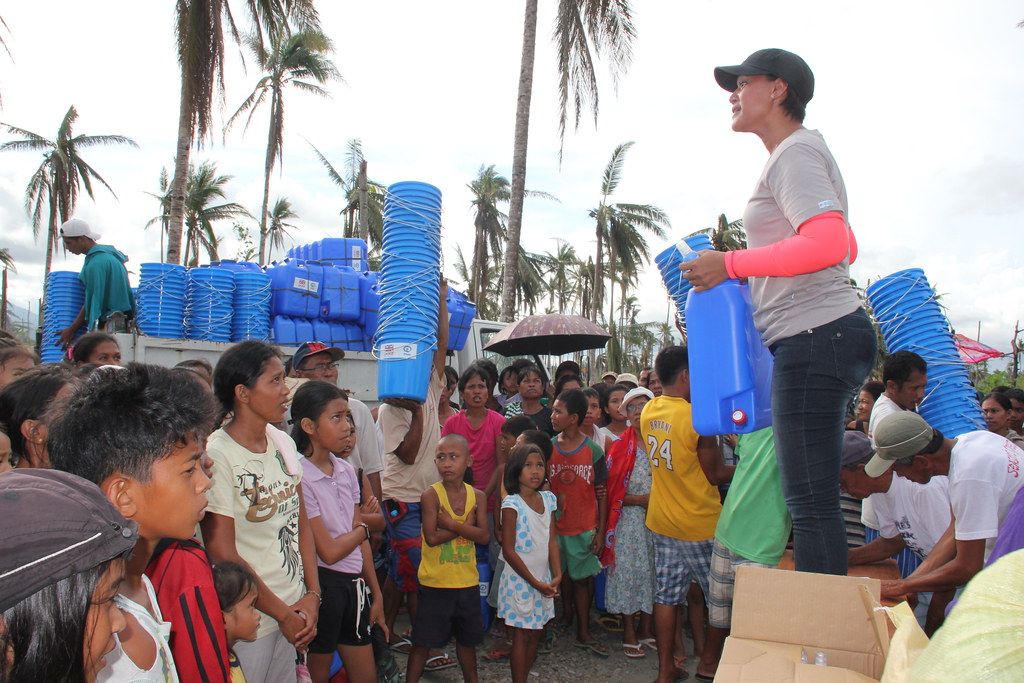
It is easy to think of poverty as a shortage of money. On the ground it often begins as a shortage of something more basic: clean water. When a family walks hours for water, and the water they find makes them ill, almost everything else they hope for is pushed out of reach.
Water is not one problem, it is the first of many
Health. Unsafe water spreads diarrhoeal disease, typhoid and cholera. A child who is repeatedly ill does not grow well, does not attend school reliably, and does not catch up easily when they return.
Education. Where water is far away, fetching it usually falls to women and girls. Those are hours taken directly out of the school day, and they are taken from the same children every day.
Time and income. A household that spends several hours a day collecting water has that much less time for farming, trading or paid work. The cost is invisible in any budget, and it is paid every single day.
Cost. Families without a safe supply often end up buying water from vendors, at a higher price per litre than a piped connection would cost. Being poor is more expensive.
This is why water tends to be the first thing communities themselves raise. It is not that water matters more than school or health. It is that water sits underneath both.
What actually makes a water point last
Drilling a borehole is the easy part. Across Kenya and the wider region, a significant share of rural water points stop working within a few years of being installed. The reasons are rarely geological:
- Nobody owns it. No committee, no agreed responsibility, no one whose job it is to notice a broken pump.
- There is no money for repairs. A functioning water point needs a small, regular contribution collected locally, before the breakdown rather than after.
- Spare parts are far away. A pump that needs a part from Nairobi stays broken.
- Nobody nearby can fix it. Maintenance training has to sit in the community, not with the organisation that installed it.
Any organisation asking you to fund a borehole should be able to tell you what happens in year three, not just what happens on the day the water comes up.
What we will and will not tell you about our own work
Our Clean Water and Sanitation programme works with communities on water access and hygiene. You will notice that this article contains no figures about how many boreholes we have drilled or how many people we have reached.
That is deliberate.
Until recently this website carried impact statistics: thousands of lives touched, hundreds of children in school, dozens of communities served. Nobody had counted any of it. It had come from a website template. We removed all of it, and we wrote about why on our Impact and Accountability page.
We would rather look smaller than we are than claim to be larger than we can prove. A number will appear here when somebody has counted it and can show the working, and not before.
What we can evidence today is our registration: certificate RSC/3811/CBO/2024, issued by the County Government of Kiambu on 22 February 2024, verifiable with the county. Three named officials. Elections every three years. Any two signatories on the account. An auditor appointed annually. Annual renewal and county reporting.
That is a smaller claim than a headline number. It is also one you can check, which a headline number very often is not.
What to ask any water charity, including us
- Who maintains this water point in five years, and who pays for it?
- How did you count the people you say you have reached? A good answer describes a method. A poor one repeats the number more slowly.
- Can you show me your registration and who your officials are?
- What happened to the last project you funded here?
If an organisation cannot answer these, that tells you something. If it can, that tells you more than any statistic on a homepage.
Lift A Life Foundation is a registered Community Based Organisation in Kiambu County. Certificate RSC/3811/CBO/2024. Ask us the four questions in this article before you give; we would rather answer them first.
Support this work
Lift A Life Foundation is a registered community based organisation in Ruiru, Kiambu (RSC/3811/CBO/2024). Every shilling given goes into our work with children, older people and people living with disabilities.
M-Pesa: Lipa na M-Pesa, Paybill 400200, account number 1151353. The account is in the foundation's name.