
Disability
Getting a Child with a Disability Assessed at an EARC
An assessment report follows a child for years. It is worth getting early, and getting right.
By the Lift A Life Foundation team · · 6 min read
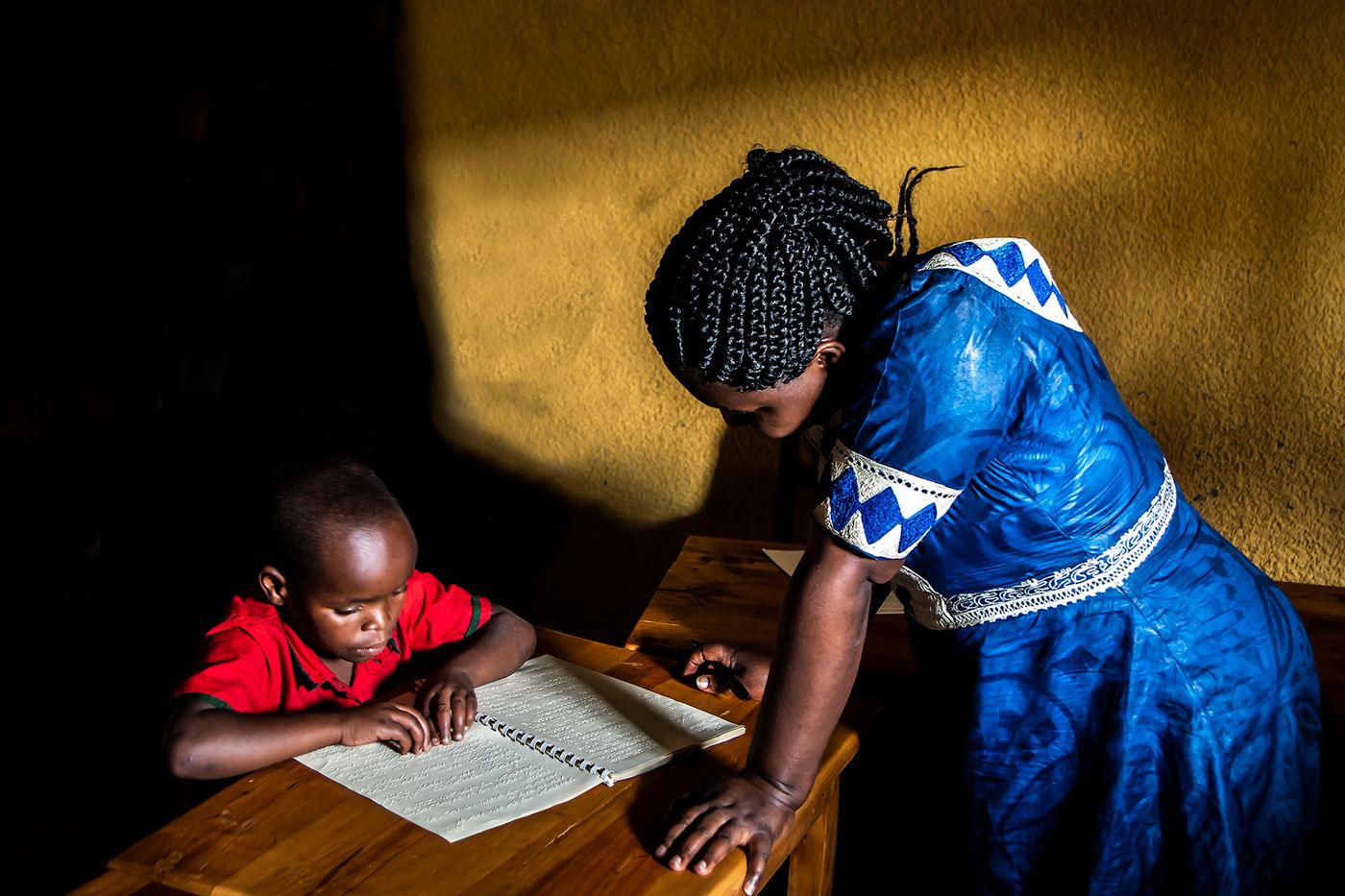
A parent notices that their child is not hearing the teacher, or cannot see the board, or is falling far behind classmates for reasons nobody can explain. The school says the child is lazy or slow. The family is told to wait and see. Years can pass this way.
Kenya has a public service built for exactly this moment. It is called an Educational Assessment and Resource Centre, usually shortened to EARC, and many families have never heard of it. This article explains what an EARC does, why the assessment matters long after the day itself, how to prepare, and what to do with the report afterwards. We have used the published sources named below and left out what we could not confirm.
What an EARC is for
The Ministry of Education's Sector Policy for Learners and Trainees with Disabilities, published in 2018, describes EARCs as centres set up for the educational assessment of children and their placement in suitable education services. In plain words, an EARC looks at how a child functions and learns, and advises the family and the school on what support the child needs.
The legal footing is in the Basic Education Act, 2013, which requires the Government to provide special needs education, either in special schools or in ordinary pre-primary, primary and secondary schools suited to the learner. The Basic Education Regulations, 2015, published on Kenya Law, provide for a learner to be assessed for placement and continuing support at an assessment centre set up at county level.
An EARC assessment is educational, not a medical diagnosis. It asks what the child can do, where they struggle, and what would help them learn: a seat at the front, large print, hearing support, a special unit, or a special school. A doctor's report and an EARC report do different jobs, and a child who needs support often needs both.
Why the assessment matters later
The report is easy to think of as a piece of paper for one decision. In practice it follows the child.
- School placement. The assessment is what guides whether a child is best supported in a regular class, an integrated school with a special unit, or a special school.
- National assessments and examinations. The Kenya National Examinations Council's form for candidates with special needs, published on knec.ac.ke for the 2025 KCSE, says that for candidates with physical or mental impairments the head teacher's letter must come with a recent detailed doctor's report and an EARC officer's assessment report on the candidate's functional ability. The same form says candidates whose medical reports are not received will not be considered for assistance during the examination. Braille, large print and other help are not given on request on the day; they are arranged through registration, with papers.
- Support in class. A written assessment gives a teacher something concrete to plan around, and gives a parent something concrete to ask for.
That is why we encourage families not to wait until an examination year. The paperwork takes time, and the school needs it at registration.
The honest picture of the service
EARCs have not always been easy to reach. In September 2026 Education News reported that the Ministry of Education plans to revive assessment centres that had deteriorated after years of neglect from around 2019 and through the COVID-19 period, starting with ten regional centres in Nairobi, Mombasa, Nakuru, Eldoret, Kakamega, Kisumu, Embu, Garissa, Nyeri and Machakos. The Kenya Institute of Special Education (KISE) in Nairobi also runs assessment services.
What this means for a family in Ruiru is that the nearest working centre, the waiting time and any charge can change. We have not found a single official list of every EARC, its hours and its fees. Before you travel, phone or visit your sub-county education office and ask. It is the right place to find out where the nearest EARC is, whether an appointment is needed, and whether there is any cost.
How to get an assessment, step by step
- Start with the school. Ask the class teacher and head teacher to write down what they have observed. If the school has a special needs teacher, ask for them too. Some schools refer children to the EARC themselves.
- Ask the sub-county education office. Find out where the EARC serving your area is, how to book, what days the assessors are in, and whether there is a fee.
- Gather your papers. See the checklist below. Take copies, not your only originals.
- Go with the child and an adult who knows them well. The assessors will want to see the child and hear how they manage at home: feeding, dressing, speech, play, sleep, and anything that has changed.
- Ask for the report in writing. Ask when it will be ready and how to collect it, and keep a copy at home as well as giving one to the school.
- Ask about review. Children change. Ask when the child should be seen again, especially before a move to a new school or level.
A short checklist to take with you
- The child's birth certificate (if the child does not have one yet, our article on birth certificates explains how to get one)
- Any clinic card, hospital notes or doctor's reports you already have
- A letter or notes from the school about what the teacher has seen
- Recent exercise books or school reports
- A short list, written at home, of what the child finds easy and what they find hard
- Your own questions, written down so you do not forget them on the day
- Your ID and a phone number where you can be reached
After the assessment
Share the report with the school and keep talking. A report that stays in a drawer at home changes nothing. Ask the head teacher what the school will do differently, and agree when you will check in again.
Think about NCPWD registration. Registration with the National Council for Persons with Disabilities is a separate process, and it opens other doors. Our guide to registering a person with disability with NCPWD explains it, and The Disability Card and What It Unlocks covers what follows.
Plan for examination years early. If the child will need Braille, large print, extra support or a reader, tell the school well before registration so the reports can go to KNEC with the registration documents.
Do not accept "wait and see" forever. If a school will not engage, ask the sub-county education office for help. Our article on disability and school sets out what inclusion should look like in practice.
Where we fit
Lift A Life Foundation is a community based organisation in Ruiru, registered with the County Government of Kiambu, certificate RSC/3811/CBO/2024. We are not assessors and we cannot diagnose a child. What we can do is help a parent or grandparent find the right office, gather the papers, write down their questions and, where we can, go with them. If that would help your family, contact us. If you would like to support families through this, you can donate or get involved.
Lift A Life Foundation is a registered Community Based Organisation in Kiambu County. Certificate RSC/3811/CBO/2024. Ask us anything about what we do and how it is paid for.
Support this work
Lift A Life Foundation is a registered community based organisation in Ruiru, Kiambu (RSC/3811/CBO/2024). Every shilling given goes into our work with children, older people and people living with disabilities.
M-Pesa: Lipa na M-Pesa, Paybill 400200, account number 1151353. The account is in the foundation's name.