
Care
More Than a Meal: Why Food Comes First, and What Follows
The first thing you notice in a hungry household is not hunger. It is quiet.
By the Lift A Life Foundation team · · 5 min read
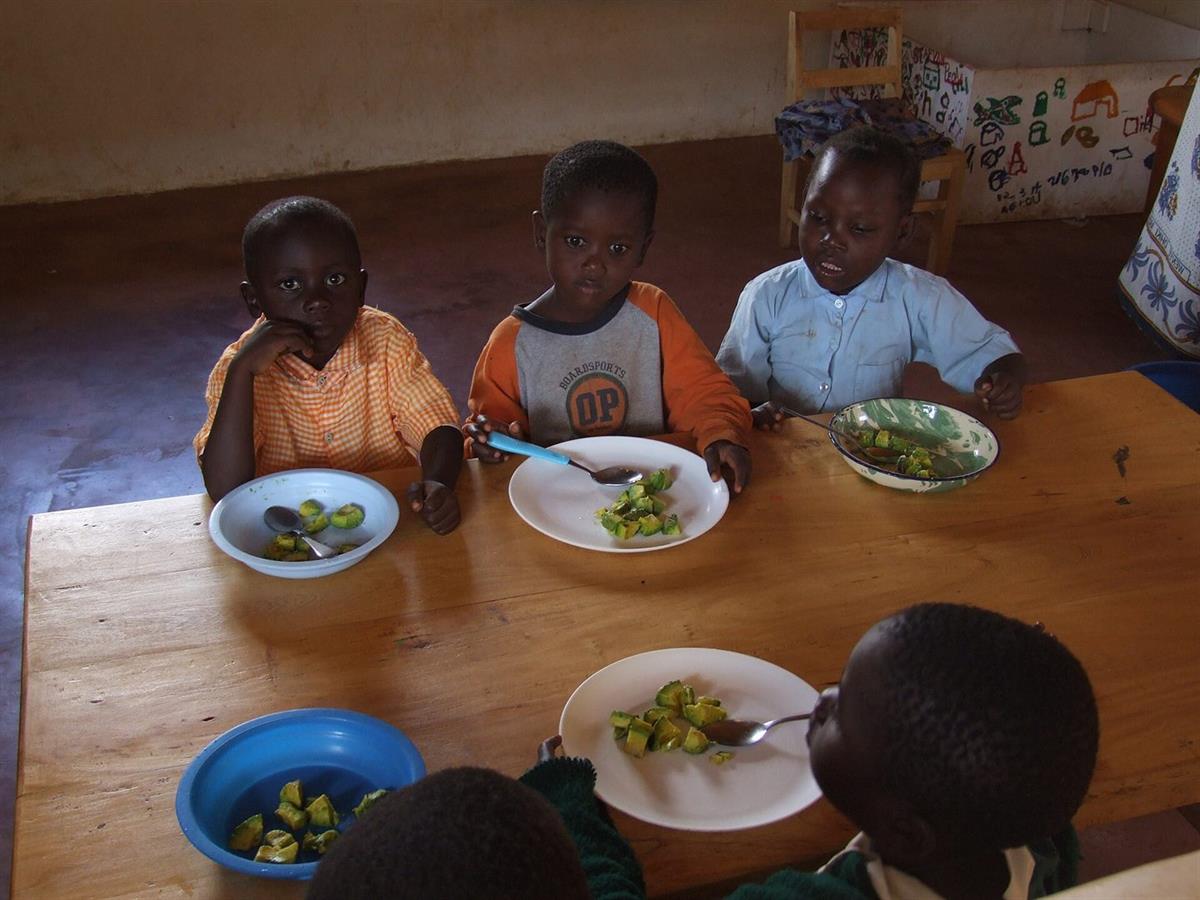
The first thing you notice in a hungry household is not hunger. It is quiet. Children who have not eaten do not run about. An older person who has not eaten does not get up to greet you. Hunger is easy to miss precisely because it makes people smaller and stiller, and it is very often the thing underneath every other problem the household will tell you about.
This article is about why food comes first in the work we do, what a meal does and does not fix, and why the way food is given matters as much as the food itself.
Why food comes first
A child who has not eaten cannot learn. Concentration goes before anything else. A teacher sees a child staring at the wall and reads it as laziness or slowness, and the child is punished for being hungry. Sending that child to school with fees paid and stomach empty is paying for a seat the child cannot use.
An older person who has not eaten cannot take medicine. Many common medicines have to be taken with food, and an older person living alone will simply stop taking them rather than take them on an empty stomach and feel worse. The illness gets worse, the appetite gets worse, and the two feed each other. Our article on when an older person stops eating describes how quickly that spiral moves.
A hungry household makes bad decisions on purpose. A child is pulled from school to earn. A possession is sold that will cost far more to replace. A loan is taken from the worst possible lender. None of these are mistakes. They are the only choices left when the immediate problem is tonight's meal.
So food is not the whole answer, and it is never our only answer. But it is almost always the first one, because until it is dealt with nothing else we could offer would be used.
What a food package does, and what it does not
A package of staples, maize flour, beans, rice, cooking oil, salt, buys a household time. It moves the question from "what do we eat tonight" to "what do we do next", and that is the question we are actually there to help with. During that time a child can go back to school, an older person can take their medicine, and a parent can look for work without the fear that stops them thinking.
What it does not do is change the reason the household was hungry. If a parent is too ill to work, the illness is the problem. If an older person has no one to cook for them, the isolation is the problem. If a child is feeding younger siblings, the missing adult is the problem. A food package that arrives every month and asks no further questions is not support. It is a habit, and it keeps the household exactly where it was, only now dependent on us.
That is why every package we deliver is delivered by a person, on a visit, with a conversation. Our article on what a home visit actually involves explains what we are looking for when we sit down.
How food is given matters
We ask first. Being given food is not neutral. For a proud person it can be humiliating, and a household that feels humiliated will not tell you the truth about what else is wrong. We ask, we listen to the answer, and when the answer is no we respect it. Our article on why we ask for consent is about exactly this.
We buy what the household actually cooks. A package designed at a desk arrives with things nobody in the house knows how to prepare. The person on the visit asks what is normally eaten, and that is what is bought.
We do not photograph people receiving food. The picture that raises money is the picture that costs a person their dignity in front of their neighbours. If you see a photograph of a beneficiary on this site, they agreed to it, and it was not taken at the moment they were handed a bag of flour.
We plan the end at the start. A food package is given with an expectation attached: that the next visit is about the reason for the hunger, not the hunger itself. Sometimes that reason is one we can help with. Sometimes it is one we have to refer elsewhere, which our article on referral explains is not the same as walking away.
What we will and will not tell you about our own work
You will notice that this article contains no count of meals served, households fed or children reached. That is deliberate. This website used to carry figures of that kind. Nobody had counted them; they came with the template the site was built on, and they were removed the day that was discovered. A number will appear here when somebody has counted it and can show the working.
What we can evidence today is our registration: certificate RSC/3811/CBO/2024, issued by the County Government of Kiambu on 22 February 2024, in Ruiru Sub County, Gitothua Ward. Three named officials. A ledger and a receipt book that record what was bought, for whom, and what it cost. That is a smaller claim than a number of meals. It is also one you can check, and if you would like to, ask us.
If you want to help with food
The most useful gift is not a sack of anything in particular. It is the fares and the shillings that let a person reach a household, ask what is needed, and buy that. Our article on giving in kind explains what actually helps and what quietly makes work for us. A meal is where the help starts. It is never where it ends, and we would not want it to be.
Lift A Life Foundation is a registered Community Based Organisation in Kiambu County. Certificate RSC/3811/CBO/2024. The most useful gift is the fare that lets a person reach a household and ask what is needed.
Support this work
Lift A Life Foundation is a registered community based organisation in Ruiru, Kiambu (RSC/3811/CBO/2024). Every shilling given goes into our work with children, older people and people living with disabilities.
M-Pesa: Lipa na M-Pesa, Paybill 400200, account number 1151353. The account is in the foundation's name.