
Older people
Registering an Older Relative with SHA
The time to find out about SHA is before the hospital desk asks for the number.
By the Lift A Life Foundation team · · 6 min read
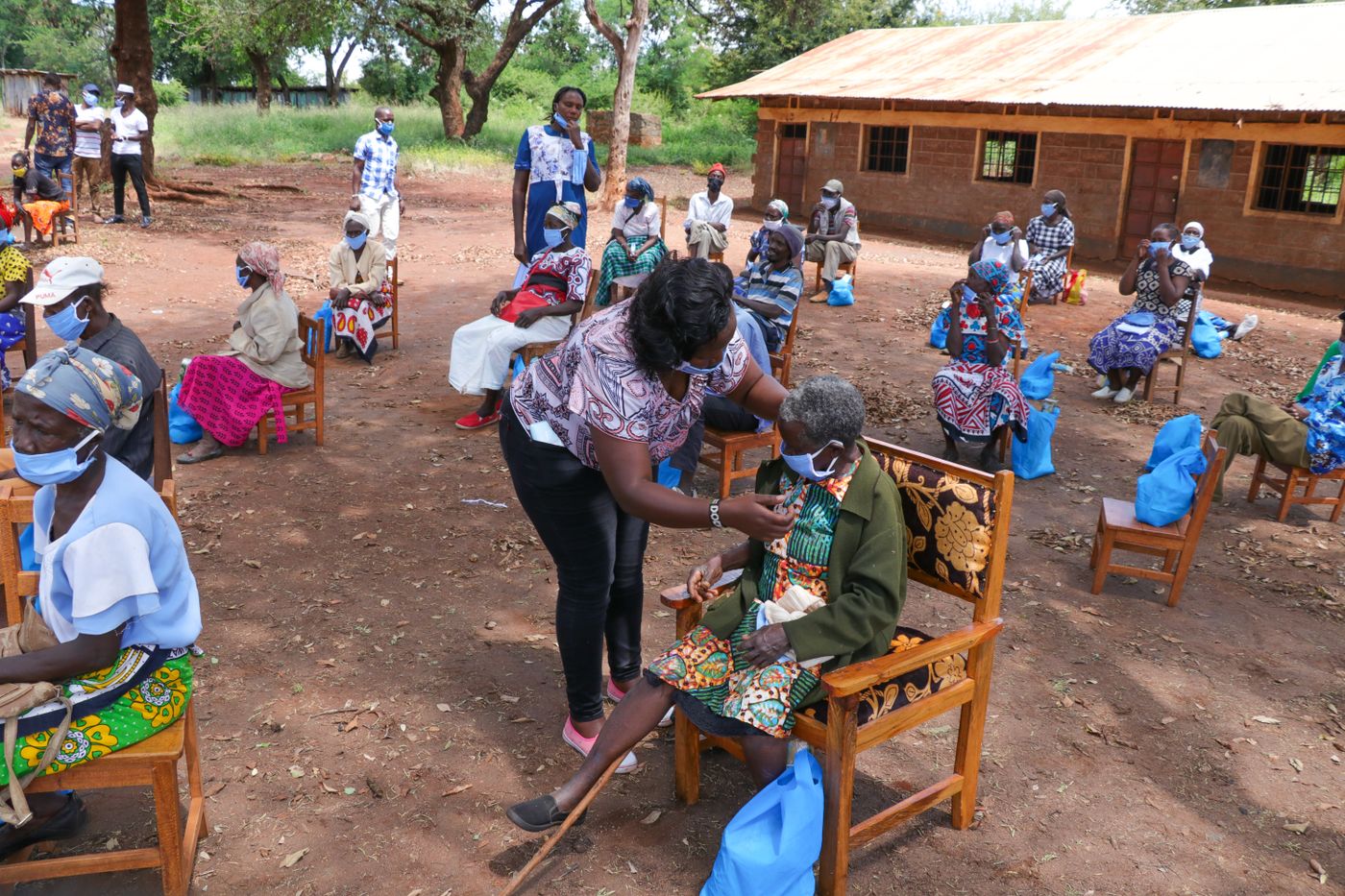
An older parent falls ill, the family goes to the hospital, and only at the desk does somebody ask for the SHA number. Nobody in the house has one for her. The NHIF card in the drawer belongs to a scheme that has been replaced.
This article is for the son, daughter or neighbour who wants to put that right before the next emergency rather than during it. Caring for older people is part of what Lift A Life Foundation is registered to do. What follows is drawn from the Social Health Authority's own pages at sha.go.ke, and where we could not confirm a detail there, we have left it out.
What SHA is, in one paragraph
The Social Health Authority (SHA) manages the funds collected under the Social Health Insurance Act, 2023, the law under which Kenya moved from NHIF to SHA. Its website says registration is open to every resident of Kenya, citizens, refugees and other non citizens alike, and that a Kenyan citizen registers with a national ID card. Age is not a barrier: the Authority's home page states there is no maximum age limit for enrolment.
An older parent usually registers in her own name. When SHA called on informal sector households to register in a notice dated 31 July 2026, reported by The Star, it described the dependants a member adds as spouses and children. Parents were not on that list. In practice, plan on your mother or father being a member in their own right, with their own ID, rather than a line on your account.
Three ways to register
The Authority's registration page at sha.go.ke/register sets out three routes. Choose the one that suits the person, not the one that suits you.
- By phone. Dial *147#, accept the SHA terms and conditions, enter the ID number and first name for verification, then complete the details and wait for a confirmation message. This works on an ordinary handset.
- Online. Open the SHA website, choose Register, read the policies and terms, enter the details and review them before submitting. The page also points to the Afya Yangu portal at afyayangu.go.ke.
- In person. Go to a Huduma Centre or an authorised SHA agent and ask for assisted registration. SHA also lists SHA offices and Community Health Promoters as places to get this help. The agent captures the details, including dependants, and the application is completed with biometrics.
For many older people, the assisted route is the right one. A phone menu that times out, small text and a PIN to remember are real obstacles, and they are nobody's fault. Going in person with the ID card, and with a relative who can read the screen back, is slower but much less likely to end in a half finished registration.
The Star's report of the July notice adds that members create an account using their ID number and a phone number registered in their own name, then set a PIN. If your parent's line is registered to somebody else, sort that out first, because it will stop the process at the start.
What the cover is built around
SHA runs three funds, and knowing their names helps when a facility explains what it can and cannot claim for.
- Primary Healthcare Fund. Outpatient care at the first level: consultations, laboratory tests, prescriptions, management of non communicable diseases, cancer screening and eye care, according to the fund's page on sha.go.ke.
- Social Health Insurance Fund. Inpatient care, surgery, renal care including dialysis, cancer treatment, imaging, mental health services and a pharmacy package for chronic conditions such as diabetes and hypertension.
- Emergency, Chronic and Critical Illness Fund. Ambulance evacuation, accident and emergency care, intensive care, chronic illness and palliative care, which SHA describes as including pain management and support for carers.
That is the outline, not the rulebook. Each service has a tariff and conditions, and the Authority publishes them under Benefit Tariffs on its website. The useful habit is to ask the facility, before treatment where you can, whether it is contracted with SHA and whether the service is covered. SHA lists contracted facilities on its site, and its eligibility checker at eligibility.sha.go.ke shows whether a member's cover is active.
Contributions when there is no salary
This is where most families hesitate, because an older parent often has no income anyone could put a figure on.
The rule as SHA states it. The Premium Rates page says contributions are 2.75 per cent of gross monthly income, with a minimum of Ksh 300 a month. People without a salary fall under Tier 2, where the 2.75 per cent is applied to household income as assessed through means testing, and the Ksh 300 minimum still applies.
Means testing is a questionnaire, not an inspection. SHA's means testing page describes it as a self assessment on afyayangu.go.ke covering income, household and other socio economic details, which then produces a yearly premium. Answer it honestly. A figure that is too high costs money every month, and the Authority asks for accurate information on income, household and assets.
Paying in small amounts. SHA's Lipa SHA Pole Pole plan lets non salaried members spread the yearly premium. The page says the first four months are paid upfront through M-PESA Paybill 200222 with the ID number as the account, and the remainder is repaid daily, weekly or monthly by dialling *147# or *254#, with no interest. To qualify you must be registered, have completed means testing and have no pending SHA arrears.
Do not let arrears build quietly. The Star reported that the July 2026 notice warned of a penalty of two per cent on late contributions. If a family member pays on a parent's behalf, put it in the household diary next to rent and school fees, so it does not depend on one person remembering.
A short checklist before you go
- The original national ID card, and a photocopy.
- A phone line registered in the older person's own name, and someone to keep the PIN safe with them.
- A list of the medicines they take and the clinic they attend, so you can ask whether that clinic is contracted.
- A realistic idea of the household's income for the means testing questions.
- Patience, and a relative or neighbour to go along.
Where to get help
SHA's toll free line is 0800 720 601, listed on sha.go.ke, and its head office is SHA Building, Ragati Road, Nairobi. For most Ruiru families the nearer help is a Huduma Centre, an authorised agent or a Community Health Promoter, all of which SHA names as assisted registration points.
If a parent is refusing to deal with any of this, that is common and worth reading about in The Older Person Who Will Not Ask for Help. Carers wanting to know what else they can request locally may find What a Caregiver Can Ask the County For useful.
We cannot register anyone with SHA or decide what anyone pays. What we can do, under the networking and community building on our certificate, is help an older person in Ruiru work out which route suits them and get to it. If that would help someone you know, get in touch. If you want to support that kind of practical work, you can give here or offer your time.
Lift A Life Foundation is a registered Community Based Organisation in Kiambu County. Certificate RSC/3811/CBO/2024. Ask us anything about what we do and how it is paid for.
Support this work
Lift A Life Foundation is a registered community based organisation in Ruiru, Kiambu (RSC/3811/CBO/2024). Every shilling given goes into our work with children, older people and people living with disabilities.
M-Pesa: Lipa na M-Pesa, Paybill 400200, account number 1151353. The account is in the foundation's name.