
Education
The Hidden Cost of the School Day for a Child in Poverty
Tuition is free, but uniforms, books, a meal and exam fees are not. A small barrier at the wrong moment is what actually ends a schooling.
By the Lift A Life Foundation team · · 9 min read
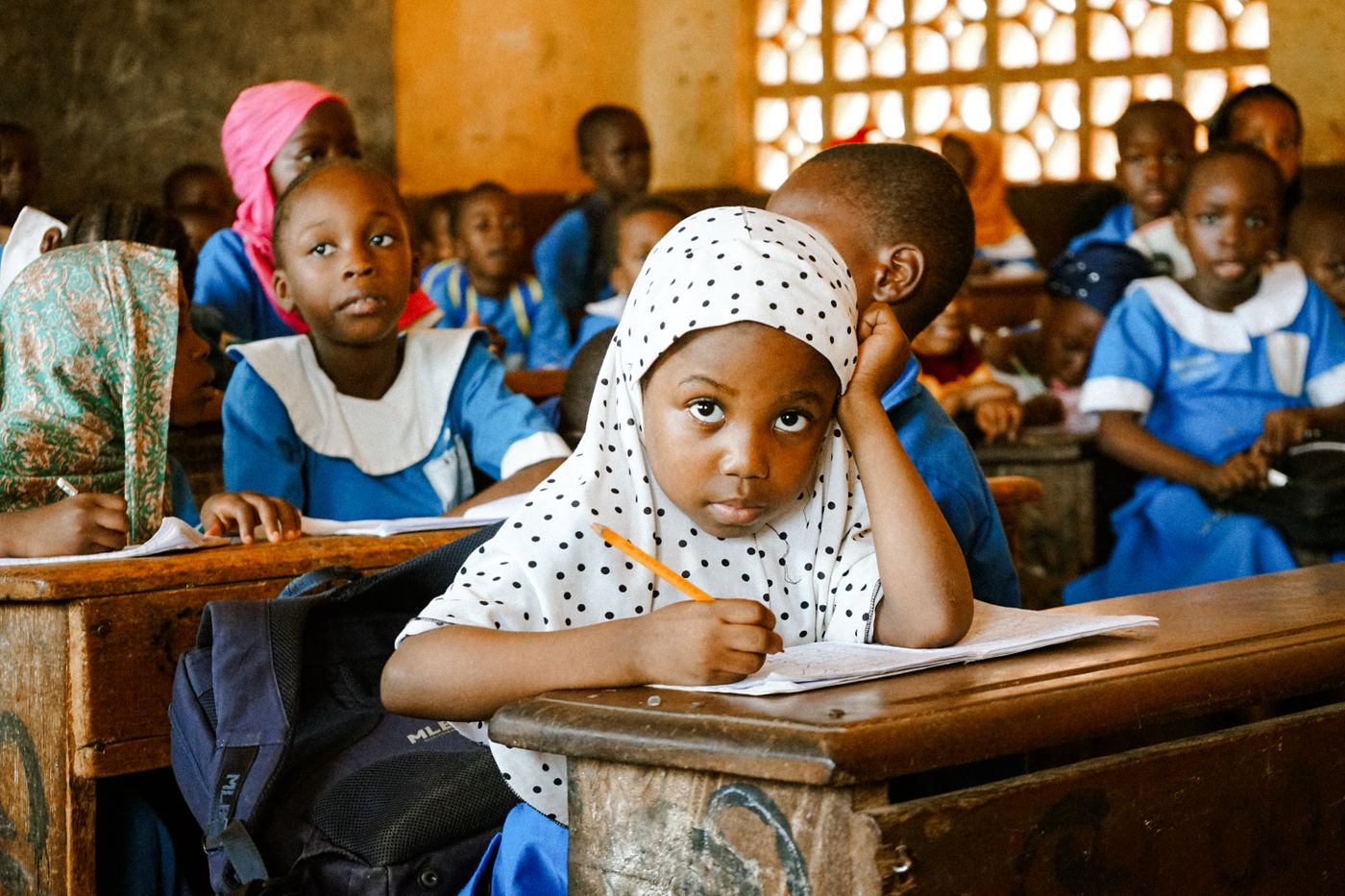
A child in a poor household is rarely kept home by one big decision. She is kept home by a torn shoe, a lost exercise book, a levy that falls due in the same week as the rent. The gate to the classroom is open, and the tuition behind it is free. Walking through that gate still costs money the family does not have on that particular morning.
Kenya abolished tuition fees for public primary schools in 2003, and later subsidised day secondary schooling. Those policies matter, and they put many children in class who would otherwise never have gone. But the word free describes the tuition line only. It does not describe the uniform, the books, the midday meal, the sanitary products, the fare or the exam registration. Those costs are real, they recur, and they land on the poorest families hardest.
This article walks through each of those costs honestly, explains how a single small barrier at the wrong moment can end a child's schooling for good, and describes, without numbers we cannot stand behind, how a small piece of well-timed help keeps a child in class. That last part is where child sponsorship connects, and we will be plain about what it can and cannot promise.
Free tuition is not the same as free schooling
When people hear that primary school is free, they picture a cost of zero. The family living it experiences something different: a list of small, non-negotiable expenses that the school cannot waive and the household cannot skip.
Economists separate these into direct costs, the things you buy such as a uniform, and opportunity costs, the value of what the child would otherwise be doing, such as fetching water or minding a stall. A poor family feels both at once. The direct costs drain the little cash they have. The opportunity costs quietly argue that the child would be more useful at home.
Free tuition removes the fee at the gate. It does not remove the cost of walking through it.
The danger is not the yearly total. Spread across twelve months, that total is often modest. The danger is timing. Several of these costs fall in the same week, at the start of a term, exactly when a struggling family has the least to give.
The uniform, the shoes, and the day a child is sent home
In most Kenyan schools a uniform is required, not optional. A child without the correct uniform, or in shoes that have finally split, is visible. Teachers notice. Other children notice. A child who feels ashamed at the door soon starts finding reasons not to reach it.
A uniform is also a growing cost, in the literal sense. Children grow, and last year's set stops fitting. Shoes wear through on long walks over rough ground. A single replacement, needed suddenly, can be the expense a household simply cannot meet that month.
This is how a schooling stalls over something as small as a pair of shoes. Not because anyone decided the child should leave, but because the barrier arrived on a bad week and nobody was there to lift it.
Books, pens, and the fees that come due each term
Tuition may be covered, but learning materials usually are not. Exercise books, pens, a geometry set, textbooks the school asks families to buy, printing and photocopying charges: each is small, and together they repeat every single term.
Then come the costs that are easy to forget until they arrive. Registration for national examinations can carry a fee. Many schools run on modest levies for activities, remedial classes or a watchman's wage. For a family already choosing between food and fare, any one of these can be the item that does not get paid.
A schooling rarely ends with a decision. It ends with a small bill that arrives on the wrong week.
When the bill is not paid, the consequence is not always dramatic. Sometimes the child is quietly sent home to collect it and does not come back. The gap becomes a week, the week becomes a term, and a child who has fallen behind is far harder to bring back than one who never left.
A meal, and the arithmetic of an empty stomach
A child who has not eaten cannot concentrate, and a child who cannot concentrate falls behind whatever the timetable says. Hunger does not announce itself in the register. It shows up as a dropped grade, a wandering mind, a head resting on the desk by mid-morning.
For some families the midday meal is the single hardest cost of the school day, and it is the one most directly tied to whether learning actually happens. A meal at school is not a luxury laid on top of education. It is often the thing that makes the rest of the day usable.
This is why food, health and learning cannot be separated, a point that runs through our programmes and one we returned to when we wrote about why clean water is the first step out of poverty. A hungry, sick or thirsty child is not failing to try. The barrier sits upstream of the effort.
The barrier that falls hardest on girls
For girls, the school day carries a cost that boys do not face. Without sanitary products, many girls miss days of class every month, and missed days compound into missed topics, lower marks and, eventually, the quiet decision to stop.
Kenyan law provides for free sanitary towels in public schools, and that is a real step forward. In practice the supply does not always reach every girl in every term, and a family that cannot fill the gap leaves its daughters to manage as best they can. The Ministry of Education and bodies such as UNESCO have long recognised menstrual health as a genuine cause of absence, not a marginal one.
The point is not to cast girls as fragile. It is the opposite. Remove a small, predictable barrier, and a capable girl simply stays in the room where her future is being decided.
Distance, transport, and the hours a child could be working
Not every child lives near a school. Where the walk is long, transport costs money the family may not have, and the walk itself drains time and energy before the first lesson begins. In the wet season a route that was passable becomes one that is not.
There is also the opportunity cost, the least visible expense of all. A child at a desk is a child not fetching water, not minding younger siblings, not helping at the market or in the field. For a household surviving day to day, that lost labour is real, and it is paid every day the child attends. None of it appears in a school budget, yet families feel all of it.
When money is short and the walk is long, the sums can tip against a bright child through no fault of their own. The barrier is circumstance, not ability.
How a small, well-timed gift keeps a child in class
Here is the hopeful part, and it follows directly from everything above. Because these barriers are small and specific, the help that clears them can be small and specific too. A uniform. A term's worth of exercise books and pens. A dependable midday meal. Support for a girl so that a week each month is no longer lost. Help with the fare, or with an exam registration that fell due at the wrong time.
Targeted help works because it meets the barrier where it actually stands. It does not require rescuing a child from everything at once. It requires removing the one obstacle that would otherwise have ended this term.
We would rather help one child we can account for than claim a number we have not counted.
This is where child sponsorship connects, and we want to describe it honestly. Sponsorship is a commitment to walk with a child through the small, recurring costs that keep them in class, so that a torn shoe or an unpaid levy is no longer the thing that ends a schooling. What we will not do is dress that up in impact statistics we cannot yet prove. You will notice this article carries no figures about how many children we have helped. That is deliberate, and you can read why on our about page.
What we can evidence is who we are. Lift a Life Foundation is a registered Community Based Organisation, certificate RSC/3811/CBO/2024, issued by the County Government of Kiambu on 22 February 2024. We have three officials, elections every three years, any two signatories on the account, an auditor appointed each year, and annual reporting to the county. That is a smaller claim than a headline number, and it is one you can check.
Frequently asked questions
Isn't school free in Kenya? Tuition in public primary schools has been free since 2003, and day secondary schooling is subsidised. But families still pay for uniforms, shoes, learning materials, meals, transport and examination registration. The word free describes the tuition line, not the full cost of attending.
What single thing keeps a child in school most reliably? There is no single thing, because the barriers differ from child to child. What is consistent is that removing the one obstacle a family cannot meet this term, whether a uniform, a meal or a fee, is usually enough to keep a child learning long enough for the next term to arrive.
How is sponsorship different from a one-off donation? A one-off gift meets an immediate need. Sponsorship is a longer commitment to the recurring costs of the school day, so the same child is not stopped by a fresh small barrier next term. Both help. Sponsorship simply plans further ahead.
Can I trust that my gift reaches a child? Ask any charity, including us, to show its registration and governance before you give. Ours is certificate RSC/3811/CBO/2024, registered with the County Government of Kiambu on 22 February 2024, with named officials, two signatories on the account and an annual audit. We would rather show you that than quote a number we cannot prove.
A small, well-timed gift can keep a child in class this term. Donate or get involved, and if you would like to ask us anything first, please do.
Lift A Life Foundation is a registered Community Based Organisation in Kiambu County. Certificate RSC/3811/CBO/2024. Ask us anything about what we do and how it is paid for.
Support this work
Lift A Life Foundation is a registered community based organisation in Ruiru, Kiambu (RSC/3811/CBO/2024). Every shilling given goes into our work with children, older people and people living with disabilities.
M-Pesa: Lipa na M-Pesa, Paybill 400200, account number 1151353. The account is in the foundation's name.