
Giving
How a Small Foundation Makes a Donation Go Further
What really happens to a shilling given to a small, community-rooted foundation, and why proximity and low overhead can make giving go further.
By the Lift A Life Foundation team · · 9 min read
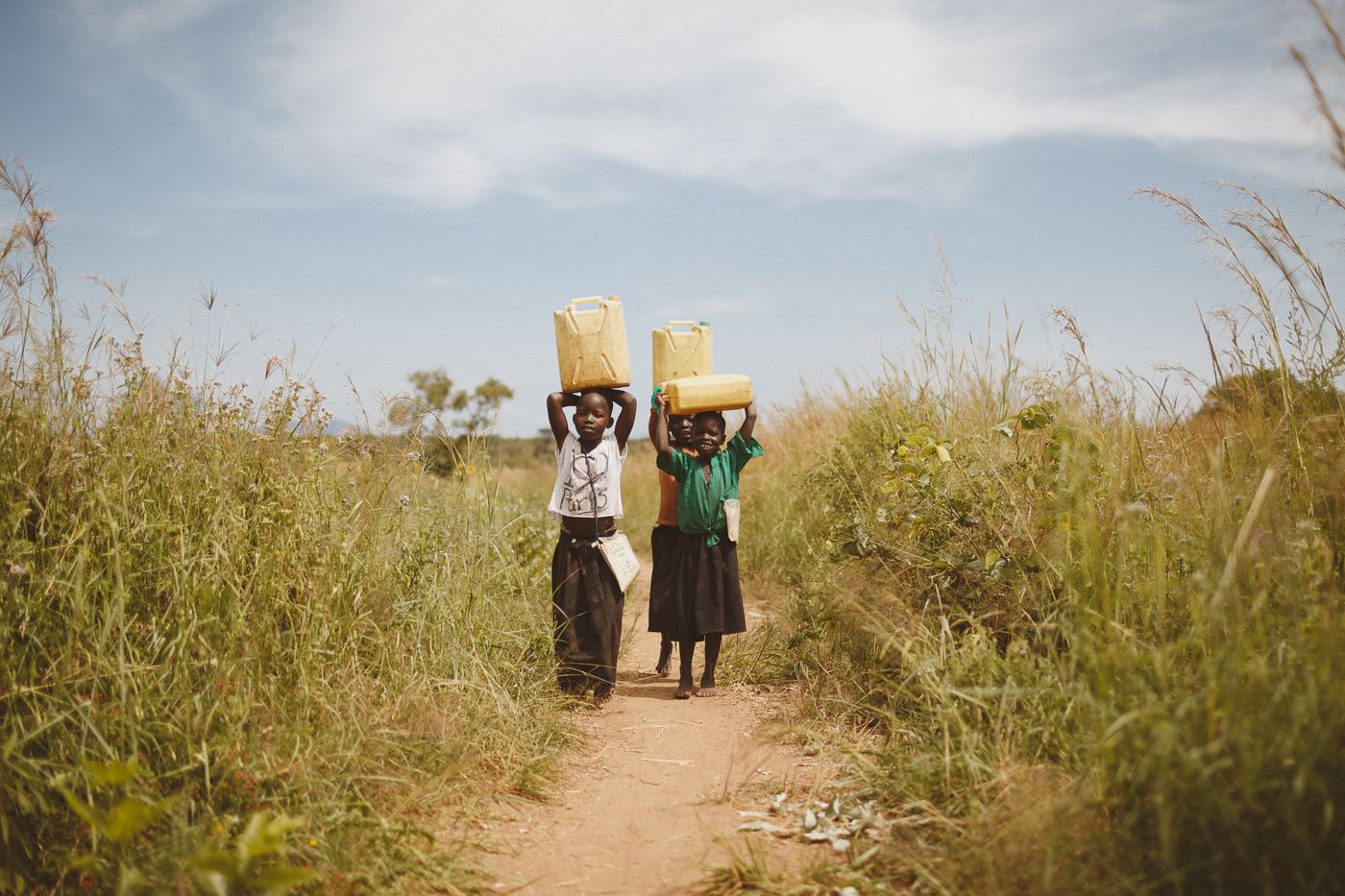
When you give money to a charity, you are trusting a group of strangers to turn your shillings into something real for someone you will never meet. Feeling a little nervous about that is reasonable. The most common question we hear from donors is not what do you do, it is simpler and sharper: where does my money actually go?
Many appeals answer with a photograph and a percentage. We would rather answer with the plumbing: who controls the account, how a project is scoped, where the materials are bought, who keeps the result running, and how you are told what happened. This article walks through that honestly, including the parts that are unglamorous.
One caveat we will not hide behind. Lift a Life Foundation is young. We were registered in February 2024 and we are still building our track record. So what follows is not a boast about results we have not counted. It is a description of how a small, community-rooted organisation is built to make each gift go further, and how you can check whether any charity, us included, actually works that way.
Where a shilling actually goes
A donation does not vanish into a single bucket labelled "the cause." It splits three ways: the direct cost of a project (materials, labour, transport to the site), the small unavoidable cost of running an organisation (banking, audit, compliance), and the cost of finding the next donor. Any honest charity spends on all three. The question is how much of the journey is spent simply covering distance.
In a very large organisation, that distance can be considerable: regional offices, layers of management, international travel, currency conversion. In a small one rooted where the work happens, the distance is short. Proximity is not a slogan, it is a cost structure. Fewer steps between your bank transfer and the borehole means fewer places for money, and intent, to leak away.
> Proximity is not a marketing line. It is a cost structure. The fewer steps between your transfer and the work, the fewer places for money, and meaning, to leak out.
How the money is controlled
This is the part donors should interrogate first, because it is where small charities most often go wrong. Our funds sit in an organisational bank account, never in anyone's personal account. Any withdrawal requires two signatories, so no single person, including an official, can move money alone. That one rule removes the most common failure mode in small non-profits.
The governance around it is a matter of public record, not a promise. We are a registered Community Based Organisation, certificate RSC/3811/CBO/2024, issued by the County Government of Kiambu on 22 February 2024 and verifiable with the county. We have three officials, elected, with elections every three years, so leadership is renewable rather than permanent. An auditor is appointed annually to examine the accounts. We renew our registration every year and report to the county.
None of that guarantees good judgement, and we would distrust anyone who claimed it did. What it does mean is concrete: money is separated from any one person's discretion, the books are examined by someone independent, and a public body can withdraw our standing if we fail to account for ourselves. Those are checkable facts. A headline number on a homepage very often is not.
Scope small, then buy local
A gift does more when it is spent against a plan rather than a mood. Before committing anything, define one project with a defined scope and a defined budget: what is being built or delivered, for whom, by when, and what "finished" actually looks like. Vague good intentions are exactly where budgets quietly disappear. A small organisation has an advantage here, because it can hold itself to one clear promise at a time.
Then buy as close to the ground as possible. Wherever it is practical, get quotes from suppliers near the site, buy materials in the local market, and hire local artisans and labour. This does two jobs at once. It strips out transport, mark-up and middle layers, so more of each shilling stays in the work. And it circulates the money inside the community you are trying to lift, paying a local mason, a local hardware shop, a local transporter. The spending itself becomes part of the benefit. You can see the shape of this discipline across our programmes.
> A donation spent against a clear plan, and bought in the local market, does two jobs at once: it builds the thing, and it puts money into the very community you are trying to lift.
A project the community owns
The hard truth of this work is that launch day is the easy day. It is well documented across the sector that a large share of rural water points and facilities fall out of use within a few years of being installed, and the reason is rarely the engineering. It is that nobody local owned them. A gift that pays for a structure but not for its future is only half a gift.
So the community has to be involved before the first shilling is spent, not thanked after the ribbon is cut. Agree who will maintain the thing, who holds the small local fund for repairs, and who to call when it breaks. Make sure someone nearby is trained to fix it, so a minor fault does not become a permanent one. A project that the community helped choose, helped build, and has agreed to look after is a project that is still working in year three. One handed over as a gift, however generous, too often is not. We wrote about what actually keeps a water point alive in an earlier piece on clean water.
Reporting back, and what you should expect to be told
You paid for it, so you are owed an account of it. Good reporting is specific and, in the best way, a little boring: what was done, what it cost against the budget, what went wrong (there is always something), and what happens next. Photographs are welcome, but they are not evidence. A photo proves a moment, not a method.
Here is what a donor should expect to be told by any charity, ours included:
- What exactly your gift funded, and what it cost.
- Who is responsible for the result now, and how it is kept running.
- How any numbers were arrived at, not just the numbers themselves.
- The registration, and the names of the people behind the organisation.
If the answer to "how did you count that?" is the same number repeated more slowly, treat the number with caution.
> A photograph proves a moment, not a method. Ask any charity not only what it achieved, but how it counted, and who keeps the result running after the visitors have gone home.
Big and small: an honest comparison
This is not an argument that small is noble and large is wasteful. Large international organisations do things a village committee simply cannot. They can mount a famine response across a region, run clinical programmes, absorb serious technical complexity, and publish audited accounts at a standard many small groups cannot match. When scale, speed and depth are what a situation needs, a large organisation is often the right home for your gift.
What scale costs is distance and overhead: more staff, more offices, more coordination, and more money spent simply keeping a large machine running and finding its next supporter. A well-run large charity is open about that and publishes its ratios. A small, local foundation makes the opposite trade: less reach and less capacity, but a much shorter path between the giver and the given. Neither is automatically better. The honest move is to match the gift to the job, and then to ask both kinds of organisation the same hard questions.
We are young, and we would rather show than tell
The most honest thing we can offer today is a clear account of what we have not yet earned. We do not publish headline impact numbers. Not because nothing has happened, but because we will not put a figure in front of you until someone has counted it and can show the working. We removed a set of template statistics from this website for exactly that reason, and we would rather look smaller than we are than claim to be larger than we can prove.
What we can show you now is the scaffolding that makes a gift trustworthy: a bank account no single person controls, an annual audit, an elected leadership, county oversight, and a way of working that scopes small, buys local, hands ownership to the community, and reports back plainly. Results should be earned first and counted second, and only then written down. If you choose to give to us, that is precisely the standard we are asking you to hold us to.
What to ask before you give to anyone
- Who controls the bank account, and does it take more than one person to spend from it?
- Is there an annual audit, and can I see the registration certificate?
- For this specific project, who maintains it and who pays for repairs?
- How were any results counted, and can you show the method?
- Will I get a plain report of what my gift actually did?
Frequently asked questions
Where does my donation go? Into a defined project (materials, local labour, transport to the site), the small unavoidable cost of running and auditing the organisation, and the cost of reaching the next donor. In a small, local foundation the project spending is short-distance and the running costs are lean, so more of your gift stays close to the work.
Is a small charity safer than a big one? Neither is automatically safer. Small and local means a shorter path and lower overhead. Large means scale, depth and reach in a crisis. Both should have the same basic controls: an account needing two signatories, an independent annual audit, and honest reporting. Judge the controls, not the size.
How do I know Lift a Life is legitimate? We are a registered Community Based Organisation, certificate RSC/3811/CBO/2024, issued by the County Government of Kiambu on 22 February 2024 and verifiable with the county. We renew our registration annually and report to the county, and any two signatories are required to move money.
Why do you not show impact numbers? Because we will not publish a figure we have not counted. When we can show the working behind a number, it will appear here, and not one day before.
If that is the kind of giving you want to back, you can help in two ways. Make a donation and every step it takes will be short and accountable, or get involved and bring your time, your skills or a partnership to the work. Either way, hold us to the five questions above.
Lift A Life Foundation is a registered Community Based Organisation in Kiambu County. Certificate RSC/3811/CBO/2024. Ask us anything about what we do and how it is paid for.
Support this work
Lift A Life Foundation is a registered community based organisation in Ruiru, Kiambu (RSC/3811/CBO/2024). Every shilling given goes into our work with children, older people and people living with disabilities.
M-Pesa: Lipa na M-Pesa, Paybill 400200, account number 1151353. The account is in the foundation's name.