
Accountability
How to Check a Kenyan Charity Is Real Before You Give
Before you give to any Kenyan charity, you can check that it is real, find out who runs it and see whether its accounts are audited. Here is exactly how, and the warning signs worth walking away from.
By the Lift A Life Foundation team · · 10 min read
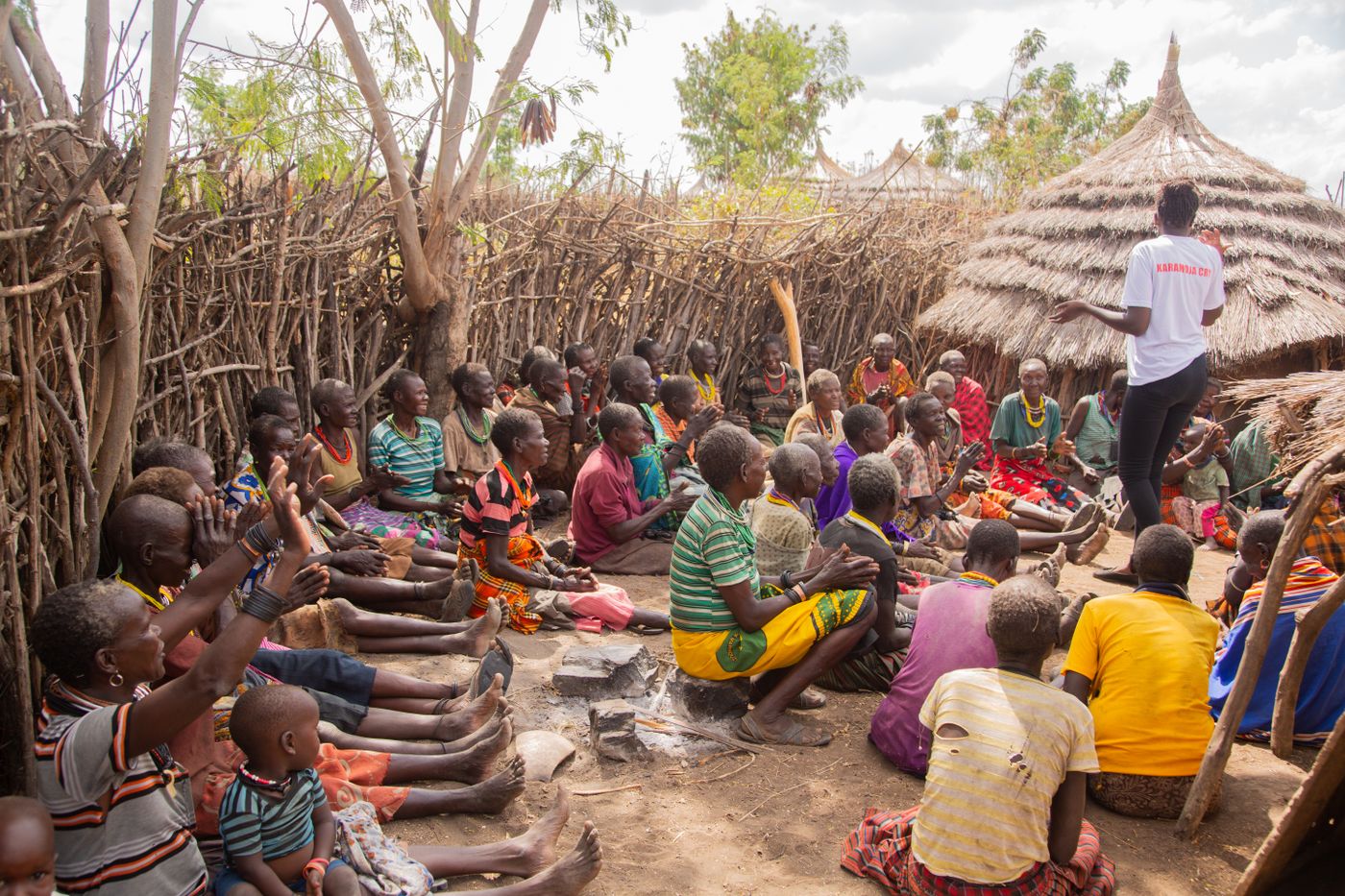
Every year Kenyans give generously: to harambees, to church appeals, to the neighbour collecting for a funeral, and, more and more, to organisations they have only met through a poster, a WhatsApp forward or a Facebook page. Most of those appeals are honest. Some are not. The difficulty is that a real charity and a convincing fake can look identical on a screen.
The good news is that you do not need to be an auditor to tell them apart. A registered, accountable organisation leaves a paper trail: a registration certificate you can check, named people who answer for its decisions, a bank account that no single person controls, and books that somebody outside the organisation examines. A vague appeal leaves none of that.
This guide walks through exactly what to ask before you part with your money, and what a good answer sounds like. We use our own registration as a worked example, not because we are the only option, but because we would rather be checked than believed. If a question in this article makes an organisation uncomfortable, that discomfort is information.
> The test of a charity is not how moving its story is. It is whether you can verify who runs it, where the money sits, and who checks the books.
First, know what "registered" actually means
"Registered" is not one thing in Kenya. There are several legal forms a charitable organisation can take, and each one is recorded by a different office. Knowing which is which tells you where to check.
A Community Based Organisation (CBO) is registered at county level, through the county Department of Social Development. CBOs are usually local in scope, and this is the most common form for grassroots work.
An NGO is registered nationally with the NGO Coordination Board, the body Kenya set up to regulate non-governmental organisations. NGOs can operate across counties and are held to national reporting requirements.
A charitable trust is created by a trust deed and can be registered under the Trustees (Perpetual Succession) Act, so that it continues even as trustees change. A society, often a membership body, registers under the Societies Act with the Registrar of Societies.
The label matters less than the certificate behind it. What you are checking is simple: does a government office somewhere hold a record of this organisation, with a number attached to it?
For the record, Lift a Life Foundation is a registered Community Based Organisation. Our certificate number is RSC/3811/CBO/2024, issued by the County Government of Kiambu on 22 February 2024. You can read more about how we are set up on our about page.
Ask to see the certificate, then check the number
A real organisation can show you its registration certificate without hesitation. Ask for it. Then do the part most donors skip: confirm that the number is genuine, not just that a certificate exists. A certificate can be edited in a photo. A registration record held by the issuing office cannot.
For a CBO, the issuing office is the county Department of Social Development that registered it. For an NGO, it is the NGO Coordination Board, which keeps a register of the organisations it has licensed and can confirm whether a body is registered and in good standing. If an organisation quotes a number, you are entitled to confirm that the number and the name match at the source.
> A certificate proves that someone printed a document. A registration number you can verify at the issuing office proves the organisation exists in law. Only the second one is worth trusting.
Be wary of two moves here. The first is an organisation that shows you a certificate but blurs or omits the number. The second is one that produces a "certificate" from a body that does not actually register charities, such as a business name registration dressed up to look like charitable status. Registering a business name is not the same as being a charity.
Ask who the officials are, and how they were chosen
Every accountable organisation has named human beings who answer for it. Not "the management," not "the team," but people with names and roles you can write down. If you cannot find out who chairs the organisation, who its secretary is and who its treasurer is, you cannot hold anyone to anything.
Then ask the follow-up question that separates a governed organisation from a personal project: how are those officials chosen, and how often? An organisation with real internal accountability holds elections on a fixed cycle, so that leadership can change hands and members have a say. An organisation run informally by one founder, with no way to replace them, concentrates every decision, and every temptation, in a single pair of hands.
Lift a Life is governed by three named officials, and our constitution requires elections every three years. That is a modest structure, but it means no single person is the organisation, and leadership is renewed on a schedule rather than held indefinitely.
Ask who signs on the bank account, and who checks the books
This is the question that makes the difference between an organisation and a collection tin. Two things protect your donation once it lands in an account.
The first is shared control of the money. In a well-run charity, no single person can move funds alone. A two-signatory rule, where any payment needs two authorised people to approve it, means that spending is a decision more than one person has seen. Ask directly: who can sign on the account, and does it take more than one signature to pay money out?
The second is an independent check on the books. Ask whether the accounts are audited, and by whom. An auditor appointed from outside the organisation, whose job is to examine the records once a year, is a far stronger guarantee than any promise on a website. It is the difference between "trust us" and "someone whose job is to be sceptical has looked."
At Lift a Life, any two signatories are required on the bank account, an auditor is appointed annually, and our registration is renewed each year with reporting to the county. None of that tells you how good our programmes are. It tells you that the machinery for catching a problem exists, which is the precondition for everything else.
Ask what happens in year three, not just on launch day
Launch days photograph well: a ribbon, a handover, a smiling crowd. The harder and more honest question is what the same project looks like two or three years later, once the visitors have gone.
We wrote about this in the context of water, where a large share of rural water points across the region stop working within a few years of being installed, usually for reasons of maintenance and ownership rather than engineering. You can read that piece on why clean water is the first step out of poverty. The same logic applies to a classroom, a bursary or a health programme: the useful question is not only what was delivered, but what keeps it running.
So ask any organisation what happened to the last project it funded in a given place. A good answer describes a specific situation, including the parts that were difficult. A poor answer restates the mission. You can see how we describe our own areas of work, without headline numbers, on our programmes page.
The warning signs that should make you keep your money
Some signals are strong enough that you should simply stop. Any one of these is a reason to ask harder questions. Several together is a reason to walk away.
- No registration number, or reluctance to share one. A genuine organisation treats its registration as an asset, not a secret.
- Emotional pressure to give right now. Urgency is the oldest tool for switching off judgement. A real cause survives you taking a day to check.
- No named, contactable people. If nobody will put their name and role to the organisation, there is nobody to hold responsible.
- Impact numbers with no working shown. Big round figures, thousands reached or hundreds of children, with no explanation of how they were counted, are marketing rather than evidence. Ask how the number was arrived at.
- Payment to a personal account or personal mobile-money number. Money for an organisation should go to the organisation's account, under shared control, not into one individual's pocket.
- Vague about the future. An organisation that cannot say what happens after launch day may not have thought past it.
> A cause that is real will still be real tomorrow. Anyone who needs your money before you have had time to check it is telling you something.
Key takeaways
- Ask which legal form the organisation takes, whether CBO, NGO, trust or society, and which office registered it.
- Get the registration number and verify it at the issuing office, not just the certificate image.
- Insist on named officials and find out how, and how often, they are elected.
- Confirm that more than one person signs on the bank account and that the accounts are independently audited.
- Ask what happened to past projects, and treat unexplained impact numbers as a red flag rather than a reassurance.
Frequently asked questions
Is it rude to ask a charity for its registration and accounts? No. A well-run organisation expects these questions and can answer them quickly. Asking is not an accusation, it is ordinary care with money that is meant for other people. If the questions cause offence, treat that as part of your answer.
A friend vouched for the organisation. Isn't that enough? A personal recommendation is a good start, but it usually tells you that the person trusts the cause, not that they have checked the registration, the signatories or the accounts. Do the checks anyway. The most convincing appeals are convincing by design.
What if the charity is new and does not have years of history yet? Newness is not a problem in itself, since every organisation starts somewhere. What matters is that the basics are in place from the beginning: a registration you can verify, named officials, shared control of the account and a plan for having the books examined. A young organisation should be able to show the structure even before it has a long track record.
Does Lift a Life publish impact figures? Not until they have been counted and the method can be shown. We removed earlier statistics from this site because they had come from a website template and had never been verified. We would rather look smaller than we are than claim more than we can prove. What we do state, and what you can check, is our registration and governance.
Give with your eyes open
Verifying a charity is not cynicism. It is the respect that serious giving deserves, both for your own money and for the people the money is meant to reach. The few minutes it takes to check a registration number, ask who signs on the account and ask what happened to the last project will tell you more than any photograph.
We welcome exactly this scrutiny. If you would like to support work you have checked for yourself, you can donate or get involved. And if you would like to put the questions in this article to us first, please do.
Lift A Life Foundation is a registered Community Based Organisation in Kiambu County. Certificate RSC/3811/CBO/2024. Ask us anything about what we do and how it is paid for.
Support this work
Lift A Life Foundation is a registered community based organisation in Ruiru, Kiambu (RSC/3811/CBO/2024). Every shilling given goes into our work with children, older people and people living with disabilities.
M-Pesa: Lipa na M-Pesa, Paybill 400200, account number 1151353. The account is in the foundation's name.