
Governance
What a Community Based Organisation Actually Is, and Why It Matters Who Runs It
A community based organisation is not a smaller NGO. It is registered at county level and answerable to its own members, and who runs it matters far more than any brochure.
By the Lift A Life Foundation team · · 9 min read
Charities are usually judged by their brochures: a clean logo, a heartfelt line about children, a photograph of a borehole. None of that tells you the one thing that actually decides whether your money does any good. That thing is who runs the organisation, and how they can be held to account.
In Kenya, a great deal of the real work at village level is done not by large national bodies but by community based organisations, or CBOs. The label sounds informal, almost small. In practice a properly registered CBO sits inside a clear legal and governance structure, and that structure is what is worth understanding before you trust anyone with a shilling or a dollar.
This article explains what a CBO actually is, how it differs from an NGO or a trust, how it is registered, and the governance that is meant to keep it honest. We use our own structure at Lift a Life as the worked example, because the fair thing is to hold ourselves to the same test we are asking you to apply to anyone else.
So what is a community based organisation?
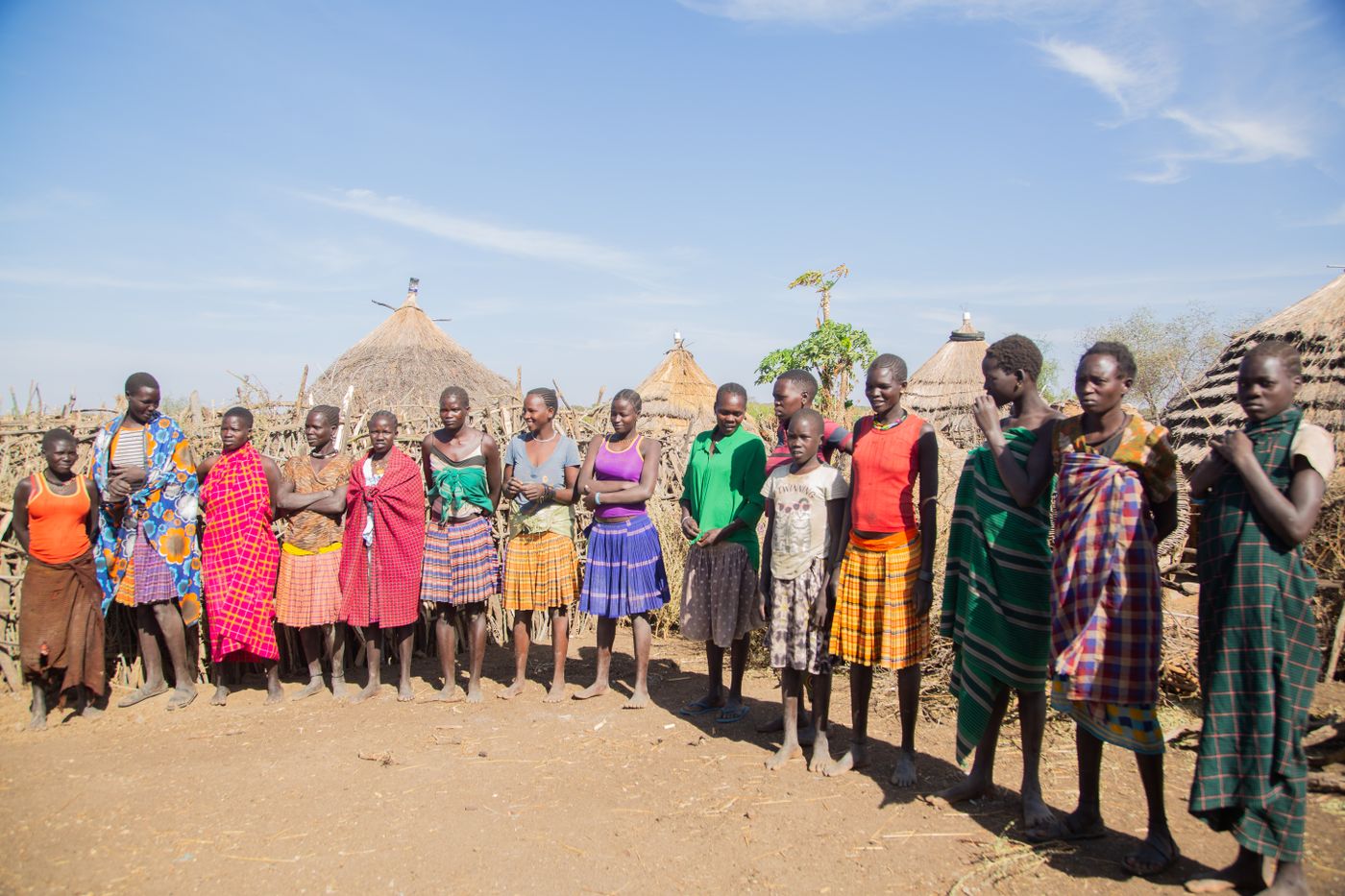
A community based organisation is exactly what the name says: an organisation rooted in a specific community, set up and run by people from that community to address needs they themselves have identified. Membership is local. The committee is drawn from the area it serves. The people making the decisions generally live alongside the people affected by those decisions.
That proximity is the defining feature. A CBO is not a branch office of something headquartered far away. It is answerable, first and most directly, to its own members and neighbours, the people who will notice at once if a promise is not kept.
Being "community based" is not a loophole for being unaccountable. A registered CBO has a written constitution, named office holders, a bank account with agreed signing rules, and an obligation to report to the authority that registered it. The informality is in the closeness to the ground, not in the rules.
> A CBO's strength is proximity. Its officials tend to live among the people its decisions affect, which makes a broken promise hard to hide and quick to be noticed.
CBO, NGO or trust: three different things
People use "charity", "NGO" and "CBO" as if they were interchangeable. Legally they are not, and the differences matter.
An NGO in Kenya is registered nationally, under a national regulator, and typically operates across several counties or the whole country. The scale is larger, the compliance burden is heavier, and the governing body may sit some distance from any single community it serves.
A trust is a legal vehicle for holding and administering assets, often established by a founder or a family and governed by trustees. A trust can do excellent work, but its accountability runs to its trust deed and its trustees rather than to a membership. There may be no members to elect anyone at all.
A community based organisation is registered locally and built around a membership in a defined area. Its officials are elected by that membership, and it answers to a county office rather than a national board. It is usually the smallest and most local of the three, and for the work it does, that is a strength rather than a weakness.
None of these forms is automatically more trustworthy than another. A large NGO can be rigorous or wasteful. A CBO can be diligent or chaotic. The legal form tells you where accountability is supposed to sit. Whether it actually sits there is the thing you have to check.
How a CBO is registered in Kenya
Registration of a CBO in Kenya happens locally, through the social development office at county and sub-county level, rather than through the national NGO regulator. In broad terms, a group that wants to become a CBO adopts a written constitution, elects its office holders, and submits its details to the relevant county department, which reviews the application and, if it is satisfied, issues a certificate of registration.
Registration is not a one-off event. A CBO renews its registration and reports to the county on a regular cycle, and that registration can lapse if the reporting is not done. This recurring obligation is quietly important. It means an active, compliant CBO has to keep proving it still exists and still functions, year after year, rather than registering once and disappearing.
For the record, and so that you can check it, Lift a Life Foundation is a registered community based organisation. Our certificate number is RSC/3811/CBO/2024, issued by the County Government of Kiambu on 22 February 2024. That is a fact you can verify with the county. It is a smaller claim than a headline statistic, and unlike a headline statistic it is one you can independently confirm.
The governance that is meant to keep a CBO honest
Here is where the worked example earns its place. Strip away the brochure language and a well-run CBO is a fairly simple accountability machine with a few moving parts. Ours has these.
A committee of officials. A CBO is run by a small group of elected office holders, not a single owner. Our constitution provides for three officials, and responsibilities and decisions are shared among them. No one person quietly controls everything.
Elections. Those officials are not appointed for life. Ours stand for election every three years. Regular elections are the mechanism by which the membership can change its leadership without asking anyone's permission.
Signatories on the account. Money is the point at which good intentions meet temptation, so the account is where to look hardest. Our constitution requires any two signatories to authorise a transaction. No single person can move the organisation's money alone. It is a deliberately dull control, and dull controls are what prevent interesting scandals.
An annual audit. An auditor is appointed each year to examine the accounts. An external eye on the books, refreshed annually, is the difference between "trust us" and "here is a check that someone independent has already done."
Annual county reporting. Finally, the organisation renews its registration and reports to the county each year. The same regulator that issued the certificate keeps receiving evidence that the CBO is still governed the way it claims to be.
> Three officials, elections every three years, two signatories on the account, an auditor appointed annually, and a report to the county each year. That is the whole machine. None of it is glamorous, and all of it is checkable.
Notice what is not on that list: our own impact numbers. You will not find a count of boreholes, children or people reached on this page, because we publish figures only once someone has counted them and can show the working. We explain that commitment in our piece on why clean water is the first step out of poverty. The governance above is what we can evidence today, and it is offered in place of numbers we have not yet earned the right to print.
Why who runs it matters more than the brochure
A brochure is designed. Governance is structural. The first is produced by whoever has the best designer. The second is produced by rules that constrain the people in charge whether they like it or not.
When you are deciding whether to trust an organisation, the useful questions are almost never about the photographs. They are about the plumbing. Who are the office holders? When were they last elected? Who can sign on the account, and does it take more than one of them? Who audits the books, and how recently? Is the registration current?
An organisation that answers those questions plainly is telling you something a glossy page never can. An organisation that deflects to its mission statement when you ask about its signatories is also telling you something. You can see how we answer these questions on our About page and across our programmes, and you are entitled to ask exactly the same of anyone else.
Closer to the ground, and why that helps
The case for a community rooted CBO is not that it is bigger or better resourced than a national body. It plainly is not. The case is proximity.
When the people governing an organisation live in or near the community it serves, feedback is fast and hard to avoid. A broken promise is noticed in days rather than at the next annual report. Priorities are set by people who will live with the consequences. And the knowledge of what a particular area actually needs, as opposed to what reads well in a proposal, sits with the committee rather than in a distant head office.
Proximity is not a guarantee of good work. A local committee can still be lazy, or captured by one strong personality. But when closeness is paired with the ordinary governance described above, elected officials, shared signing authority, an annual audit and a live registration, it becomes a real asset. You get local knowledge held accountable by local rules.
> Proximity without governance is just a small organisation nobody is checking. Governance without proximity is a distant one that cannot see the ground. A community based organisation, run properly, is meant to be both close and checkable.
Questions worth asking any CBO, including us
- Are you registered, and can you show the certificate and the issuing county?
- Who are your officials, and when were they last elected?
- How many signatories does it take to move money?
- When were your accounts last audited, and by whom?
- Is your registration current, and when did you last report to the county?
If an organisation can answer these, you have learned more than any statistic on a homepage could tell you. If it cannot, you have learned that too.
Frequently asked questions
Is a CBO a real legal organisation, or just an informal group? A registered CBO is a recognised organisation with a certificate, a written constitution, elected officials and a reporting duty to the county. The words "community based" describe how local it is, not how informal.
Is a CBO the same as an NGO? No. An NGO registers nationally and usually works at a larger scale under a national regulator. A CBO registers locally through the county and is built around a membership in a defined area.
How can I check that a CBO is genuine? Ask for the registration certificate and confirm it with the county that issued it. Then ask who the officials are, how many people must sign on the account, and when the accounts were last audited.
Why does Lift a Life not show impact numbers on this page? Because we publish figures only once they have been counted and can be evidenced. What we can prove today is our registration and our governance, and that is what this article sets out.
Lift a Life Foundation is a registered Kiambu County community based organisation, run by elected officials and audited every year. If that is the kind of accountability you want your giving to sit behind, you can support our work or find a way to get involved.
Lift A Life Foundation is a registered Community Based Organisation in Kiambu County. Certificate RSC/3811/CBO/2024. Ask us anything about what we do and how it is paid for.
Support this work
Lift A Life Foundation is a registered community based organisation in Ruiru, Kiambu (RSC/3811/CBO/2024). Every shilling given goes into our work with children, older people and people living with disabilities.
M-Pesa: Lipa na M-Pesa, Paybill 400200, account number 1151353. The account is in the foundation's name.