
Disability
A Ramp Costs Less Than You Think
Ask what keeps a person with a disability indoors and the answer is rarely the disability. It is the step, and a fundi can often fix it in a morning.
By the Lift A Life Foundation team · · 6 min read
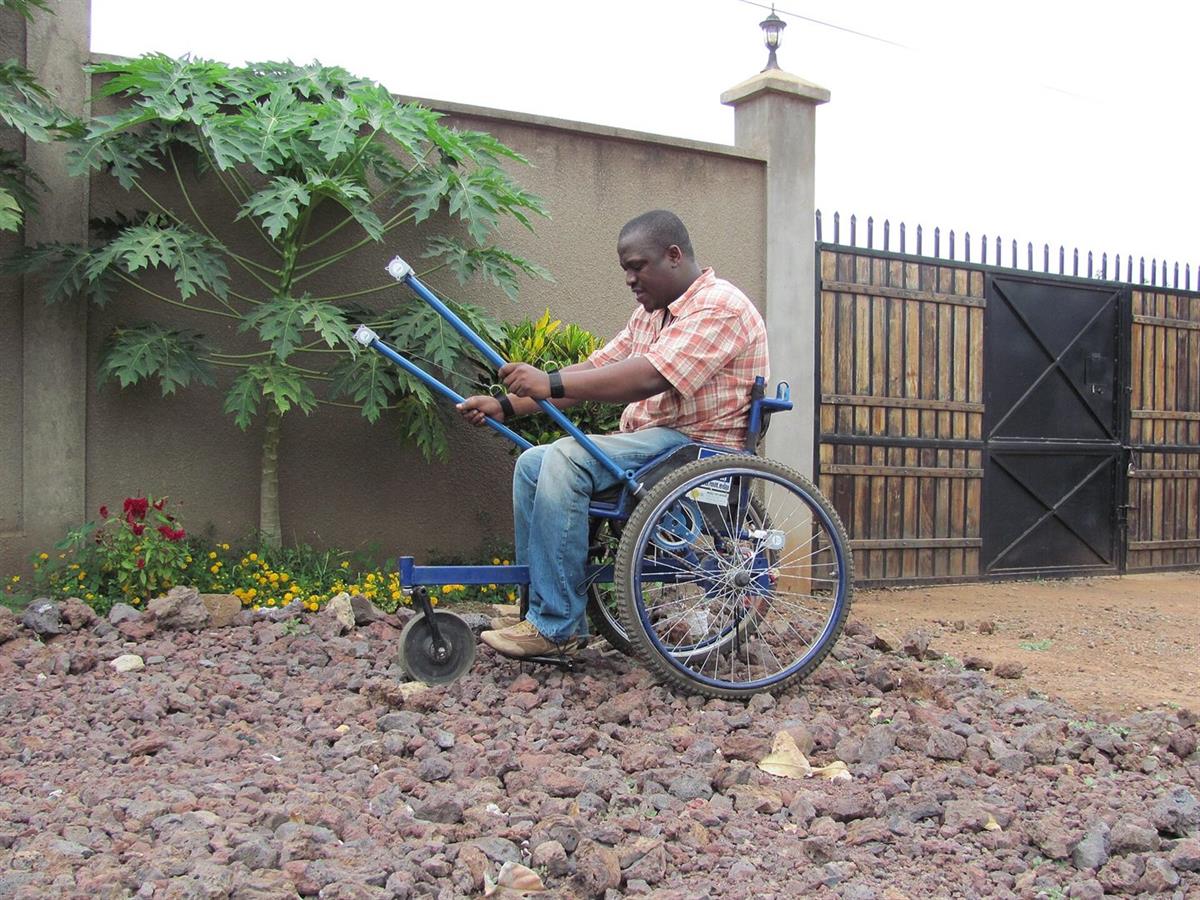
Ask what keeps a person with a disability indoors and the answer is rarely the disability. It is the step. The one at the front door, the one at the latrine, the one at the shop. Each is a few hands high and each is a wall to somebody in a wheelchair, on crutches, or with knees that no longer trust a drop.
Lift A Life Foundation is a community based organisation registered in Kiambu County, and persons with disabilities are among the groups we are registered to serve. We are not builders or clinicians. What we have noticed, house by house, is that the thing between a person and the rest of their life is often something a fundi could fix in a morning.
Three steps that decide a day
The doorstep decides whether the person leaves the house at all. A raised threshold keeps rain and dust out. It also means getting outside needs somebody strong enough to lift a chair, and willing to do it every time. So the person waits, and waiting becomes the habit of the day.
The latrine step decides dignity. Most latrines sit on a raised slab reached by a step or two. If those cannot be climbed alone, every visit needs help, and the person starts drinking less so as to ask less. A health cost hidden inside a building problem.
The shop step decides whether the person is part of the neighbourhood. The kiosk, the church, the chief's office, the clinic gate. Each has a lip at its entrance that says, without meaning to, send somebody else. After enough of them the person stops trying, and the community stops seeing them.
What a usable ramp actually needs
A ramp is not a plank leaned against a step; that is how people get hurt. A usable ramp has four parts.
A gentle slope. A slope a fit person barely notices can be impossible for somebody pushing their own chair. Gentle means longer, which is why ramps get built too steep: they run out of room. Better to turn the ramp along the wall than make it short and sharp. We give no ratio, but the test is simple. If a person cannot go up alone, and cannot come down without fear, it is too steep.
A firm surface. Wheels sink into loose soil and slip on smooth cement, and a crutch tip needs something to bite into. The surface should be even, without gaps that catch a small front wheel, and rough enough to hold when wet.
A rail. Not everybody who uses a ramp is in a chair. Somebody with a stick, an older person with a bad hip, a child learning to manage alone: each needs something to hold. A rail on one side, fixed firmly enough to take a person's full weight, turns a slope into a route.
A landing. At the top there must be flat ground to stop on, because a door cannot be opened while holding a chair against a slope. If the ramp turns, it needs a flat corner. The landing is the part most often left out, and the part that makes the rest safe.
Earth, timber or concrete
The cheapest ramp is packed earth: soil built up against the step, shaped into a slope and compacted hard, with stones set into the surface to stop it washing away. It costs labour more than money. It also needs looking after, because rain will find it.
Timber comes next. Planks on a frame go up quickly and can be moved if the household moves. The weakness is that timber rots, termites eat it, and a ramp gone soft underneath gives way without warning. It suits a rented house better than a permanent one.
Concrete lasts. A properly cast ramp with a rough finish outlives the people who built it and needs nothing beyond keeping it clear. It costs more in materials and cannot be moved, so it belongs at a home the family owns, or at a shop, a church or a latrine that will stay put.
We will not put a price on any of these, because prices change and we would rather say nothing than say something wrong. All three are within reach of an ordinary household with a little help.
A fundi and a morning
This is not specialist work. Any fundi who can lay a slab or frame a door can build a ramp; most of the skill is in getting the slope right and the surface rough. With materials on site, an earth or timber ramp is a morning's job. Concrete takes longer to cure, not much longer to build.
The household decides where it goes. The people who live there know which door is used, which side the chair approaches from, where the water runs when it rains. A ramp built without asking ends up in the wrong place, and a ramp in the wrong place gets used as a bench. So we ask, we listen, and the fundi builds what the family described.
What a doorway gives back
The person can leave the house without waiting to be lifted. That is the obvious gain. The other lands on everybody else. The relative who was the lifting arm gets their mornings back. The child kept home to help can go to school. The person can sit outside, greet a neighbour, use the latrine alone and buy their own bread. None of that shows in a photograph, and all of it is the difference between being cared for and being part of a family.
We have not published figures on any of this, because we are small and do not yet have numbers we would be comfortable defending. If you know a house in Ruiru or nearby where a step is doing this to somebody, tell us. If you would like to pay for a fundi's morning, that is a gift that gets used the same week.
Lift A Life Foundation is a registered Community Based Organisation in Kiambu County. Certificate RSC/3811/CBO/2024. Ask us anything about what we do and how it is paid for.