Disability
Assistive Devices Beyond the Wheelchair
The wheelchair is the symbol, but most of what changes a disabled person's day is smaller, cheaper and useless without an assessment, a fit and somebody coming back.
By the Lift A Life Foundation team · · 6 min read
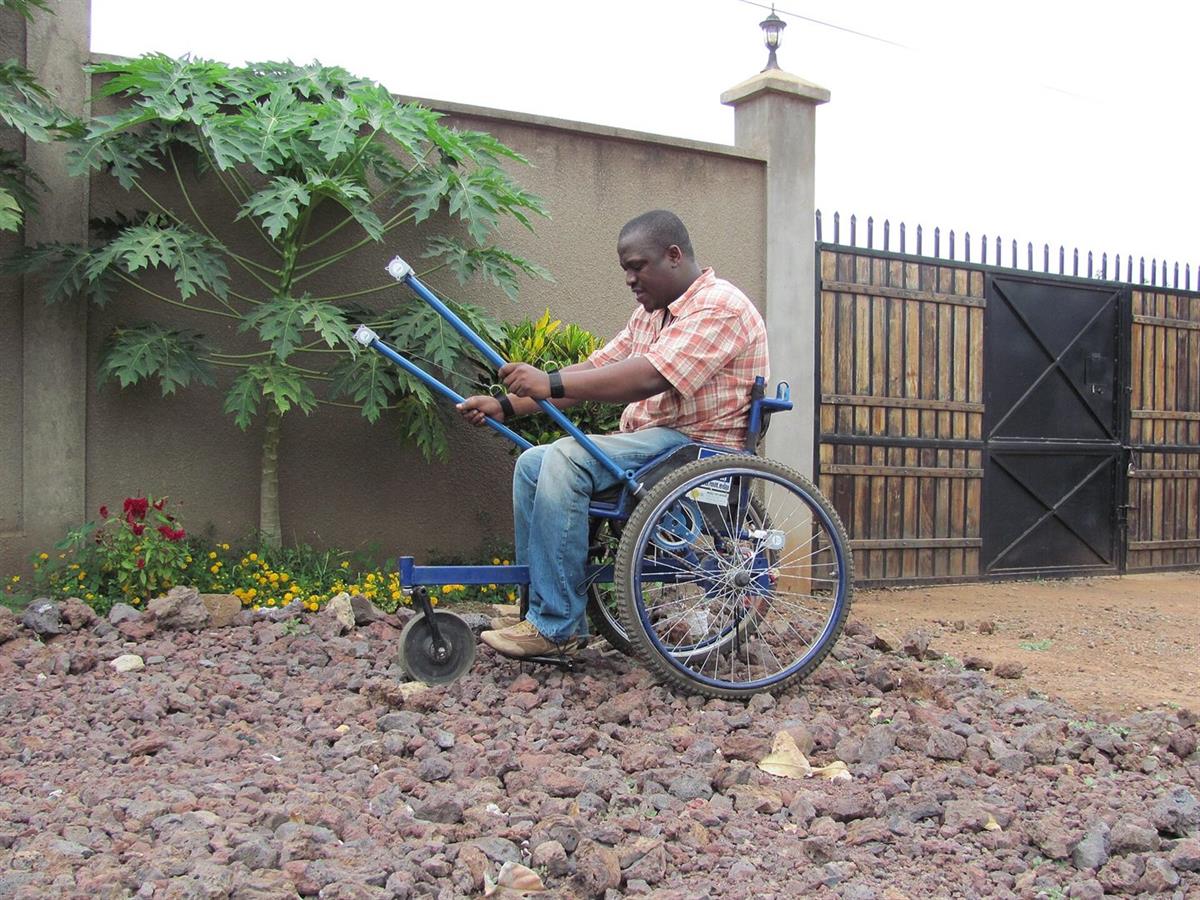
When people picture help for a person with a disability, they picture a wheelchair. It is the symbol on the door and the item donors ask about first. Most of what actually changes a day is smaller and cheaper, and gets far less attention because it does not photograph well.
Lift A Life Foundation is a community based organisation registered in Kiambu County, and persons with disabilities are among the groups we are registered to serve. We are not clinicians. This is about the ordinary items that sit between a person and a normal day, and why handing one over is the easy part.
The unglamorous list
A pair of spectacles is the most common one. Reading a label, threading a needle, seeing the step before the foot reaches it. A person whose sight has gone down slowly stops reading and stops going out after dark, and the world gets smaller without anyone calling it disability.
A walking stick or a frame puts a person back on their feet. The difference between the two is the difference between a wobble and a fall, and which one a person needs is not obvious from looking at them. Crutches belong in the same family, useful for some and dangerous for others.
A hearing aid returns conversation. Somebody who cannot follow what is said at the table stops joining in, then stops being included, then is described as confused when the problem was always the ears.
The rest are about dignity in the house. A commode chair means not waiting for help with the toilet at night. A raised seat means getting up from a chair or a latrine without a second person. A white cane means a blind person leaves the compound alone and is recognised on the road. None of these is exciting. Each one removes a reason to need another adult present.
The right device is an assessment, not a guess
A device that suits one person can harm another. Crutches given to somebody without the arm strength to use them create a new fall. Spectacles bought on a guess can make headaches worse and still not let the person read. Somebody qualified has to look at the person, not the diagnosis, and say which item and which size.
That assessment is what most donations skip. The natural sequence is to buy the item and then find somebody to give it to. The useful sequence is the other way round: find the person, have them seen by somebody who knows what they are looking at, and only then buy what was recommended. It is slower, and the money sometimes goes on a different item than the donor had in mind.
Our part is the connection, not the clinical judgement. We do not decide what somebody needs. We can know who in the area is qualified, help a person reach them, and go back afterwards to see whether the thing is being used.
Fit, repair and batteries
A device has to fit the body it was given to. A stick cut too long or too short changes how a person leans and turns help into strain. A frame at the wrong height is abandoned within a week. Fit is why the same item cannot be bought in bulk and handed out in a line, however efficient that looks.
Every one of these things breaks. Rubber tips wear through. Frames lose a screw. Spectacle arms snap and are held with tape until the tape gives up. Repair is rarely expensive, but it needs somebody to notice and somewhere to take it, and a person who cannot walk far without the device cannot walk to get it mended.
Batteries are the quietest failure of all. A hearing aid with a flat battery is a piece of plastic in a drawer, and batteries are a recurring cost on top of a one-off gift. If nobody planned for that, the aid works for the first weeks and then stops, and the person is back to nodding along at the table.
The person chooses
A device is something a person has to be willing to be seen with. A white cane announces blindness to everyone on the road. A hearing aid, to some people, announces age. Those feelings are not vanity and they decide whether the item leaves the house.
So the person picks, within what the assessment allows. Between two items that would both work, the one the person prefers is the one that will be used. A donor who insists on a particular thing, because it was the thing they imagined, is buying their own picture of help rather than somebody else's day.
Choice also includes saying no. Pressing a device on somebody who does not want it produces the same result as the wrong device: a thing in a corner.
Why the corner fills up
Ask around any community and somebody knows of a wheelchair under a sheet, a frame behind a door, spectacles in a drawer that were never quite right. All gifts, given in good faith. What they had in common is that nobody came back.
Follow-up is where a device either becomes part of a life or becomes clutter. Somebody has to return after a month and ask whether it is being used, and if not, why not. The answer is usually small: the tip wore out, the battery ran flat, the height was wrong, the person was embarrassed. Each is fixable, and none gets fixed unless somebody asks.
That visit is unglamorous work and the part hardest to find money for, because it produces nothing to photograph. We are small and do not claim to have solved it. We do believe a cheap item with follow-up beats an expensive item without it, and we would rather help fewer people properly than hand out more and never return. If that is work you want to support or be part of, look at what we do or get involved.
Lift A Life Foundation is a registered Community Based Organisation in Kiambu County. Certificate RSC/3811/CBO/2024. Ask us anything about what we do and how it is paid for.