
Accountability
How We Decide Who We Help
A small organisation says no more often than yes, so the way we choose deserves to be written down and shown.
By the Lift A Life Foundation team · · 6 min read
A small organisation with limited money says no more often than it says yes. That is the plain fact behind every household we do not reach, and it is why the way we choose deserves to be written down and shown. If people are going to trust us with money or with their time, they should know how a name gets onto our list and how one gets left off it.
Lift A Life Foundation is a Community Based Organisation registered with the County Government of Kiambu, in Ruiru Sub County, Gitothua Ward. Our certificate names three activities: caring for orphans and vulnerable children, the elderly and persons with disabilities; advocacy; and networking and community building. That registration is the first filter. The rest of this piece is about the ones that follow it.
The mandate decides before we do
We are registered to serve three groups. Orphans and vulnerable children, older people, and persons with disabilities. Those are not slogans. They are what we told the county we would do, and what we report on in the returns we file each quarter. A household that does not fit one of those three is not our household, however real its need.
That sounds hard, and it is meant to. A small organisation that helps everyone a little helps nobody in a way that lasts. Keeping to the mandate is what stops the money going wherever the pressure is strongest that week.
Fitting the mandate is necessary, not sufficient. Plenty of households qualify on paper. Our money does not stretch to all of them, so within the three groups we still have to choose, and that is where the rest of the process comes in.
Nobody is put on the list from a desk
We visit before we decide. A name reaches us by word of mouth, through a chief's office, a church, a neighbour, or the person themselves. Whatever the route, the next step is the same: somebody from the foundation goes to the house. Not to the shopping centre nearby, not to a relative's place, but to where the person actually sleeps.
The visit is where the story and the facts meet. A form can say a widow is caring for grandchildren alone. The house shows whether that is true, whether a grown son lives in the next room, whether the roof leaks, whether the children are in school, whether there is food in the house today. None of that can be seen from an office.
It also protects the household. A person asking for help is in a weak position, and it is easy to make them perform their poverty in front of strangers. Going to them and asking ordinary questions is the least undignified way we know to find out what is needed.
Need over distance, and need over noise
Closeness to the office is not a reason. The households easiest to reach are the ones nearest us, and the temptation for any small group is to serve its own street and call that a programme. We try to weigh a household by what it lacks and what would change if we stepped in, not by how cheap it is to get there. A far household in real trouble comes before a near one in mild difficulty, even though the fare costs us more.
The loudest voice does not go first. Some people ask often, ask well, and know which official to speak to. Others, often the ones in the worst state, ask nobody at all. An older person living alone will not turn up at a meeting to make a case. A child does not write a letter. If we only served the people who pushed, we would serve the wrong people, so part of the job is going looking for the ones who have not asked.
What we refuse, and where we send it instead
We say no to what we cannot do properly. We do not run an orphanage, and we will not pretend that a child can be placed with us. We are not clinicians and give no medical or medication advice. We do not hand out cash to anyone who arrives at a meeting with a story, and we do not fund a need that turns out, at the house, not to be there.
A refusal should still leave the person better off than before they asked. Where the need is real but outside our mandate or beyond our means, we say so plainly and point to who can help: the chief's office, the county's social services department, a health facility, a church, another organisation whose work fits. Networking and community building is one of our registered activities precisely so that a no from us can still be a route to somebody else.
Why the decision is written down
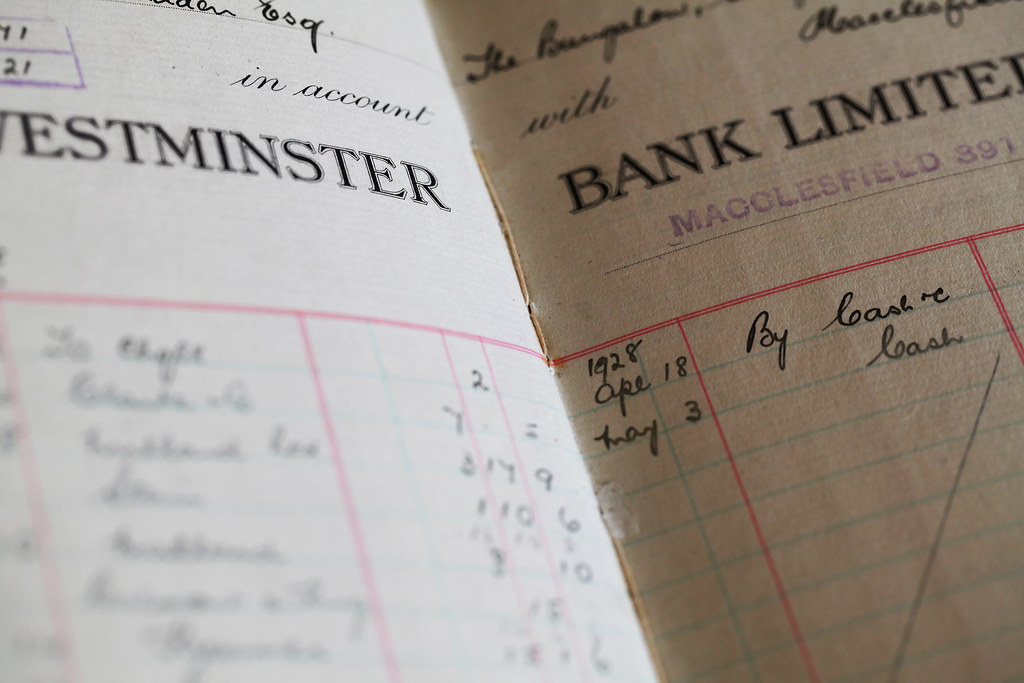
Every decision has a record. Who was visited, when, by whom, what was found, what was decided and why. A refusal is recorded with its reason and where the person was referred. This is not paperwork for its own sake. It is what makes the decision something the foundation made, rather than something one person felt on a given afternoon.
A written record can be checked. Our officials (Eunice Wangari Muthoni as Chairperson, Judith Muthoni Wangari as Secretary and Peter Minja Macharia as Treasurer) can look back and ask whether the households we serve match the reasons we gave. A donor can ask the same question. So can the county, which renews our registration each year and receives our quarterly returns.
It also protects us from ourselves. Memory is generous to whoever holds it. Ink is not.
We publish no impact numbers yet, because we do not have figures we would stand behind. What we can show is how we choose. If you want to see the process before you trust us with anything, read more about the foundation, or ask us directly. We would rather be questioned than assumed.
Lift A Life Foundation is a registered Community Based Organisation in Kiambu County. Certificate RSC/3811/CBO/2024. Ask us anything about what we do and how it is paid for.