Older people
The Grandmother Raising Grandchildren
Two of our registered activities meet in one household more often than anywhere else.
By the Lift A Life Foundation team · · 6 min read
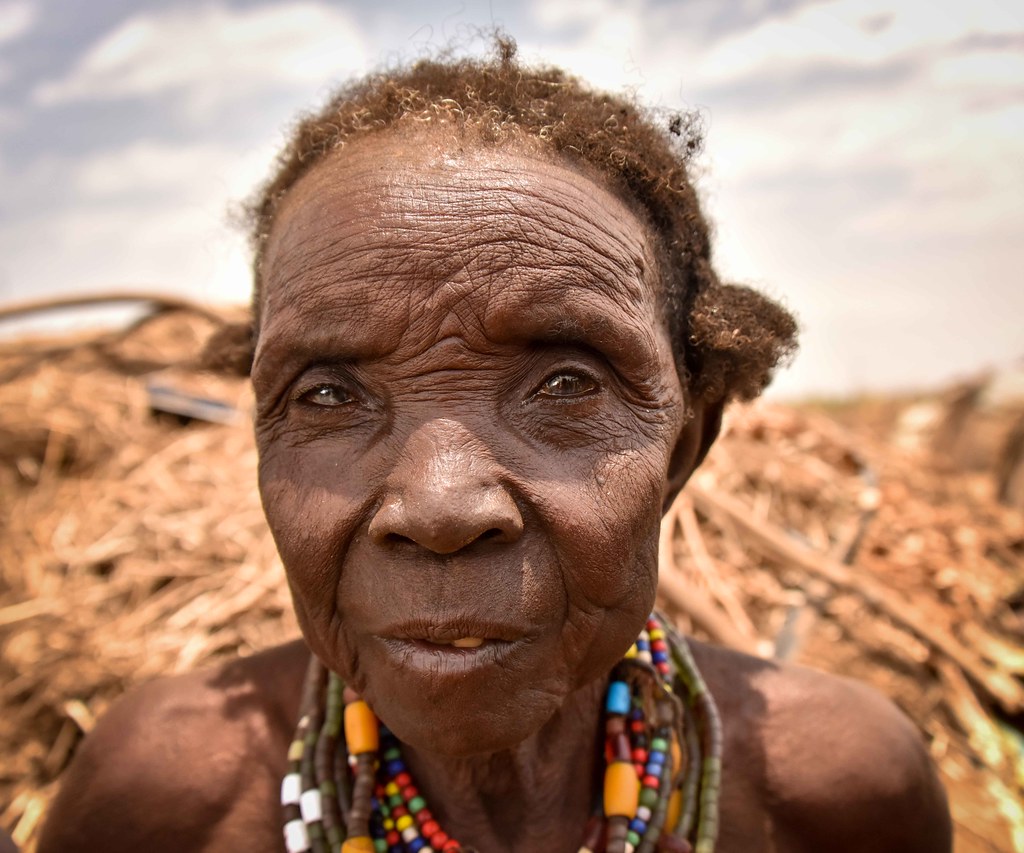
Two of the three groups we are registered to care for often live in the same house: an older person, and children who have lost the parent who should be raising them, sharing one roof and one income.
These are sometimes called skipped generation households, because the generation in the middle is absent. They are not unusual, and they are quiet. Nobody reports them, because from outside they look like a family, which is exactly what they are.
Where two of our registered activities meet
Lift A Life Foundation is registered by the County Government of Kiambu, under certificate RSC/3811/CBO/2024, to care for orphans and vulnerable children, the elderly and persons with disabilities. On the certificate those are separate groups. In a skipped generation household they share an address.
The grandmother is old enough to be receiving care and is providing it instead. The children are vulnerable in the formal sense whether or not anybody has written it down. Assess either half alone and you miss the other.
Help aimed only at the children leaves the person doing the work with nothing. Help aimed only at the older person ignores that what she has already goes to feeding somebody else. Supporting her is how the children get supported, because she is the route by which anything reaches them.
One income, several dependants
The arithmetic is the first pressure. Where an older person receives a state cash transfer, it is intended to support the person receiving it. Here it also feeds growing children and meets school costs that arrive in lumps: uniforms, shoes, levies, examination fees. A steady income manages steady expenses and is defeated by a sudden one.
Earning more is not simply a question of willingness. The work available to an older woman in and around Ruiru is usually physical: farming, casual labour, carrying, selling. It is the work her body is least able to do, and it competes with the hours the children need her at home.
The first thing cut is usually invisible. Her own medication, her own food, her own clinic visit. The children's needs are in front of her; hers can be postponed, so she postpones them. That is a competent adult choosing between bad options, and it is also how a household loses the person holding it together.
The work is physical and the body is older
A sick child has to be carried. The distance to the clinic is a different distance depending on who is walking it. A grandmother with a painful hip or failing sight may not be able to get a feverish three year old there, and nobody else in the house may be strong enough to help.
Small children move faster than she does. Supervision is physical work. So is fetching water, cooking for several people, washing for several people, and doing all of it again the next day.
The result is that things get delayed rather than refused. A clinic visit waits for a day when she feels stronger. A school meeting is missed because the walk is too long. That is the gap between what the household requires and what one ageing body can deliver, and a neighbour or a relative can close it cheaply.
Documents and land
The documents leave with the parent. A birth certificate is usually held by a mother or a father, and when that parent dies or goes away the paperwork often goes too. A child without one meets an obstacle at examination registration, at any application for support, and wherever an institution needs to know who they are. The grandmother may hold no document connecting her to them at all.
Land and inheritance are frequently unsettled. When the middle generation dies, the question of who holds the land is often left open and relatives may have claims. An older woman can find herself occupying land she cannot prove is hers. That insecurity shapes ordinary decisions, including whether it is worth planting or repairing anything.
Both problems are procedural, which is another way of saying they can be solved. What they need is somebody who knows which office handles what and keeps going back until the matter is finished. That is what advocacy means for us: not campaigning, but following a process to its end for a person who cannot travel to it.
Why these households are easy to miss
They do not present as an emergency. There is no collapse and no dramatic event, so nothing prompts a call. The household is functioning, on a margin thin enough that one illness or one school levy ends it, but from outside it simply looks like a grandmother and her grandchildren.
The people inside them do not ask, either. A woman raising a second family is unlikely to describe herself as needing help. She will say she is managing, and in a real sense she is. That answer is not a reason to stop asking.
What is useful is unspectacular: knowing which households look like this, visiting on a schedule so problems get noticed while they are small, carrying what is heavy, helping with the forms. Support that keeps the household intact beats support that moves the children out of it.
If you know a household like this in Ruiru or the surrounding communities, tell us. If you would like to help this work continue, the donate page has the details.
Lift A Life Foundation is a registered Community Based Organisation in Kiambu County. Certificate RSC/3811/CBO/2024. Ask us anything about what we do and how it is paid for.