
Advocacy
What an Accessible Ruiru Would Look Like
Accessibility is usually treated as a favour rather than a requirement.
By the Lift A Life Foundation team · · 6 min read
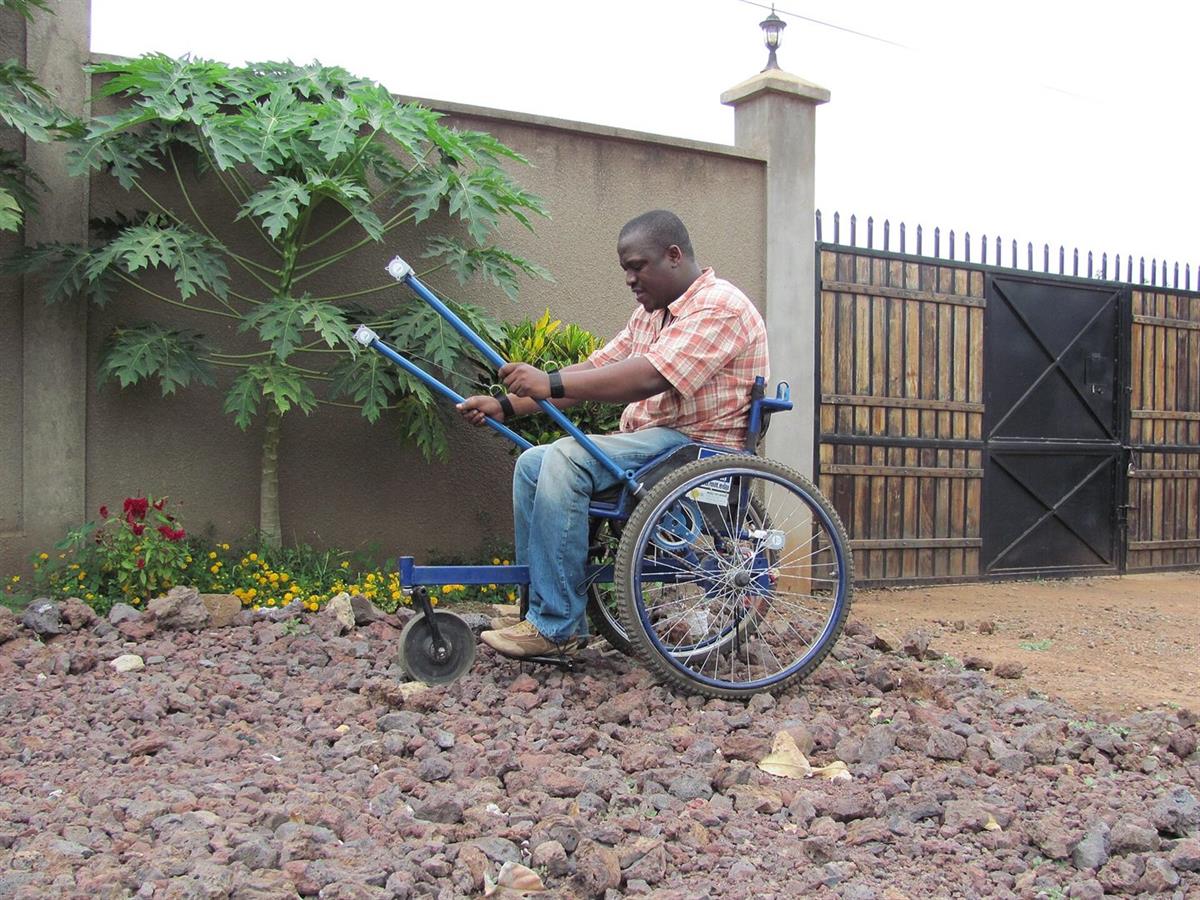
A person using a wheelchair can travel the length of a Ruiru street without any difficulty at all, and then be stopped for good by the kerb at the end of it. The distance was never the problem. The lip of concrete was.
We tend to talk about accessibility as generosity, something a building offers out of goodwill and can withdraw when money is tight. It is not generosity. It is a requirement, and almost all of it is cheap if somebody thinks about it before the concrete sets.
The details that decide who comes in
A kerb with no drop. A pavement is only useful if there is a way onto it and a way off it again. Where the crossing has no ramped section, the pavement becomes a wall, and the person is pushed out into the road with the traffic.
One step at a shop door. A single step is nothing to most people and absolute to some. It decides whether a customer buys here or somewhere else, and shopkeepers are often surprised to learn they have been turning trade away.
A doorway too narrow for a chair. This is usually settled by a fundi with a tape measure and no particular reason to think about it. Once the frame is set, widening it is a demolition job rather than a decision.
A latrine with nothing to hold on to. A rail fixed to the wall costs very little. Without one, a person who could otherwise spend a whole day at a school, a church or an office simply cannot stay there.
Getting there, and being served once you arrive
A matatu with a high step and no time. The step is one problem. The larger one is that boarding is expected to take seconds, so anybody who needs longer is treated as an inconvenience rather than a passenger who paid the same fare.
A service counter above head height. For someone seated, a high counter means speaking to a chest, passing documents upward, and having their own business conducted over their head by people standing. A lowered section at one end of the same counter removes all of that.
Then there is the road that turns to mud in the rains. An unsurfaced approach is a seasonal closure notice for anyone on wheels, and it shuts a clinic or a school as effectively as a padlock, for weeks at a time, every year.
These are decisions, not weather
None of this reflects badly on anybody's character, and the useful shift is to stop treating a step as a feature of the landscape. Somebody chose that level. Somebody chose the width of the door, the height of the counter, the position of the tap and the surface of the path.
Each was a decision made quickly, by a person with a great deal else to think about, and almost always with no intention of shutting anyone out. That is the good news. Decisions can be made differently next time, by the same people, at the same cost, if the question reaches them early enough.
It also sets the tone for the conversation. We are not accusing anyone of cruelty. We are pointing at a choice that was made without the relevant information, and offering the information.
Cheapest at the moment of building
A ramp poured while the slab is being poured is part of the job. A ramp added two years later is a separate contract, a separate mess and a much larger bill. The same holds for a wide door, a rail, a counter with a low end, and a firm surface on the approach.
This is why we would far rather talk to somebody who is planning a building than to somebody who has finished one. At the planning stage, access is a short list of small specifications. Afterwards it is a renovation, and renovations get postponed indefinitely.
It is also why the argument is worth making to churches, schools, clinics and landlords who are in the middle of an extension. The moment there is already a builder on site is the cheapest moment there will ever be.
How we go about asking
Advocacy is one of the three activities we are registered for, and in practice it looks far less confrontational than the word suggests.
We ask. Most people have never been asked. A plain question about whether someone in a wheelchair could get through the door is often the first time it has come up, and the reaction is usually embarrassment rather than resistance.
We show. A description does less work than a presence. When the person who cannot get in is standing at the entrance, the problem stops being abstract, and it stops being about us.
We keep coming back. Very little changes in the first conversation. Things change in the fourth, when a wall is being repaired anyway and somebody remembers what was said.
We do not name businesses and we do not shame anyone in public. Shame produces defensiveness, and defensiveness produces nothing. We want the ramp, not the argument. So if you are building, extending or repairing anything in Ruiru and would like a second pair of eyes on these details before work starts, talk to us. If you would rather be part of the asking, there is room for you.
Lift A Life Foundation is a registered Community Based Organisation in Kiambu County. Certificate RSC/3811/CBO/2024. Ask us anything about what we do and how it is paid for.